AMD and Xanadu Launch Backline for Sub-3μs Quantum-Classical Sync
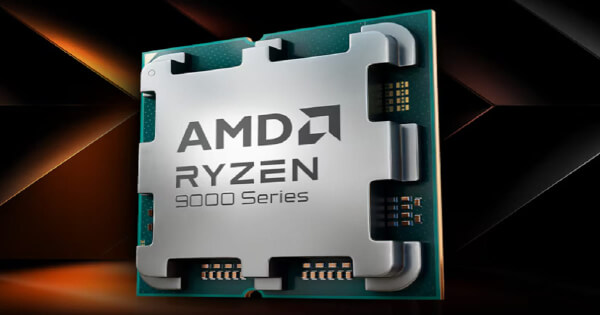
AMD and Xanadu's Backline slashes quantum-classical communication latency to under 3μs. Integrated into PennyLane, it accelerates fault-tolerant quantum computing.
AMD and quantum computing startup Xanadu have unveiled Backline, a new platform designed to streamline communication between classical computing hardware and quantum processors. Integrated into Xanadu’s open-source software platform PennyLane, Backline promises sub-3 microsecond latency for quantum-classical hybrid workflows. This reduction in latency addresses a critical bottleneck in scaling fault-tolerant quantum systems, where ultra-fast feedback loops are essential for tasks like quantum error correction (QEC).
Backline operates as a heterogeneous compilation and runtime environment, bridging various classical processors—CPUs, GPUs, FPGAs—and quantum hardware. Its key innovation lies in enabling real-time execution of quantum algorithms by tightly integrating classical processing into the quantum compute stack. According to AMD and Xanadu, this integration is vital for advancing quantum technologies in areas such as secure networking, advanced sensing, and scalable quantum computing.
In quantum computing, timing is everything. Many quantum operations require near-instant feedback from classical processors to correct errors or control the system. For instance, in QEC, classical processors must decode quantum measurement data in microseconds to prevent fragile quantum states from degrading. Backline achieves this by leveraging AMD’s classical hardware—such as Instinct GPUs, Ryzen Threadripper processors, and EPYC server CPUs—along with its adaptive SoCs and FPGAs to ensure seamless, low-latency communication.
Internal benchmarks highlight Backline’s capabilities: an AMD Threadripper Pro workstation coupled with an AMD Versal FPGA achieved a mean latency of 2.3 microseconds for CPU-based tasks and 4.4 microseconds for GPU-based tasks. This performance positions Backline as a game-changer for quantum-classical integration, where even millisecond delays can render systems ineffective.
To simplify the development process, Backline is built natively into PennyLane, a Python-based quantum development platform widely used by researchers and engineers. This allows users to write, test, and deploy quantum algorithms without needing to dive into low-level programming languages. For developers working on QEC, hybrid algorithms, or experimental quantum hardware, Backline offers a unified Python interface to map quantum workloads onto classical hardware. It also supports cross-platform compatibility, working seamlessly with CPUs, GPUs, and FPGAs from various vendors.
“Backline’s Python-native framework removes barriers for quantum-classical co-design,” said Xanadu representatives. “Researchers can prototype error-correcting codes or hybrid algorithms in Python and deploy them directly to hardware, significantly accelerating the path from R&D to production-grade systems.”
As quantum computing transitions from research to commercial use, platforms like Backline could play a pivotal role in enabling scalable systems. The open-source nature of the tool encourages collaboration, allowing developers across the industry to contribute and adapt it for specific use cases. For Xanadu, Backline aligns with its focus on photonic quantum processors, which operate under some of the tightest timing constraints in the field. For AMD, it underscores the company’s commitment to being a leader in heterogeneous computing, leveraging its expansive CPU, GPU, and FPGA portfolio.
While no financial or market valuation data for Backline is currently available, its release as an open-source platform within PennyLane signals a strategic focus on ecosystem growth rather than immediate monetization. With quantum computing still years away from mass adoption, AMD and Xanadu appear to be investing in foundational infrastructure to position themselves as leaders when the technology matures.
Backline is available today, offering developers the tools to deploy practical quantum algorithms on both classical and quantum systems. The collaboration between AMD and Xanadu marks a significant step toward addressing the operational challenges of hybrid quantum-classical systems. Future updates are expected to expand Backline’s capabilities, including enhanced support for Xanadu’s photonic hardware and advanced memory management features via AMD’s open-source spatial runtime.
For those eager to explore Backline, resources like detailed documentation, tutorials, and benchmarks are available through PennyLane’s platform and AMD’s developer portal. Whether you’re a researcher prototyping quantum error correction or an engineer building production systems, Backline offers a glimpse into the future of quantum-classical integration.
Asanat Analysis — Why it matters
Backline addresses a genuine infrastructure gap in quantum computing: the latency bottleneck between classical and quantum processors. At sub-3μs latency, it targets the microsecond-scale timing requirements of quantum error correction (QEC)—a prerequisite for fault-tolerant quantum systems. This is not speculative; QEC demands real-time classical feedback loops to prevent quantum state decoherence. The technical achievement (2.3μs on CPU, 4.4μs on GPU) is meaningful because millisecond-scale delays render such systems operationally useless.
The strategic pairing of Xanadu (photonic quantum hardware) with AMD (classical compute portfolio) signals how quantum computing infrastructure is consolidating around vertical integration. By embedding Backline into PennyLane—an open-source standard with broad adoption—both companies position themselves as foundational layer providers rather than betting on a single quantum architecture. This mimics how classical software ecosystems matured: standards and interoperability frameworks capture more long-term value than proprietary hardware.
The open-source, Python-native approach matters for adoption velocity. Quantum development remains bottlenecked by tooling complexity; reducing friction between algorithm design and hardware deployment accelerates the feedback loop for researchers. However, this is an R&D-focused play in a sector still 3-5 years from commercial traction. AMD and Xanadu are building market infrastructure ahead of demand, betting that owning the integration layer becomes critical when quantum systems transition from labs to production environments.