Bitcoin Core developer responds to AI & Quantum Risk
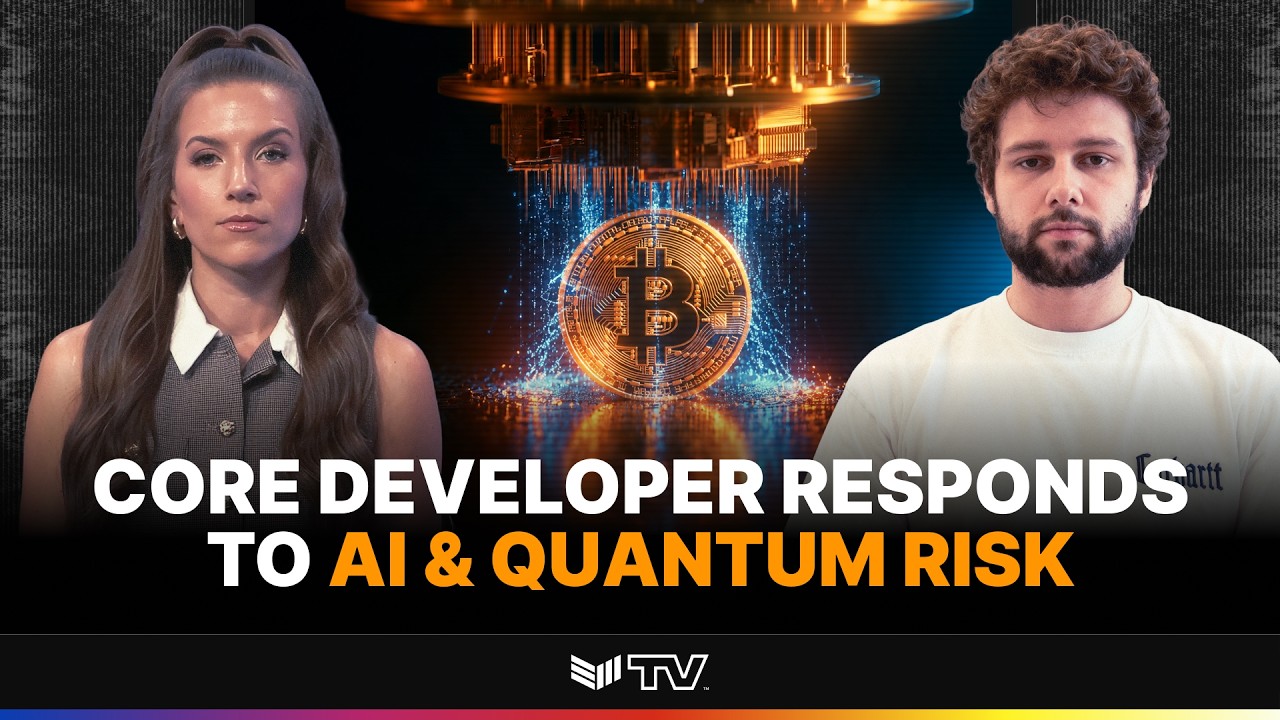
Bitcoin Magazine Bitcoin Core developer responds to AI & Quantum Risk Is AI address security fear-mongering? Chaincode Labs' Antoine Poinsot answers Justin Drake's viral post, breaking down quant...
Is AI address security fear-mongering? Chaincode Labs' Antoine Poinsot answers Justin Drake's viral post, breaking down quantum risk and preparation.
Has AI really changed Bitcoin’s address security, or is it just fear-mongering? Bitcoin Core contributor Antoine Poinsot of Chaincode Labs joins Grace Remington and Sean Hagan to respond to Justin Drake’s viral post. He explains why security researchers need evidence before making claims, and what’s actually at stake with quantum computing risk. He also shares why preparing early matters more than reacting out of fear.
Chapters:0:00 – Antoine Poinsot Responds to Justin Drake’s Bitcoin Address Security Claims1:05 – What the Failed Summer Soft Fork Taught Bitcoin2:35 – BIP 54 Consensus Cleanup: Fixing Long-Standing Bitcoin Bugs3:44 – Why Bundle Four Fixes Into One Soft Fork4:53 – Building Consensus to Activate BIP 546:53 – How Quantum Theft or Frozen Coins Could Break Trust in Bitcoin9:08 – BIP 360 vs. BIP 361 vs. P2TR v210:38 – Why Hiding Public Keys Behind Hashes Is a Red Herring11:52 – Lessons From the Coldcard Incident12:29 – Reducing Single Points of Failure With Multisig and Liana
DISCLAIMER: The views and opinions expressed in this show are those of the participants and do not necessarily reflect the official policy or position of BTC Inc., Bitcoin Magazine, or any affiliated entities. This content is provided for informational and educational purposes only and should not be construed as investment, legal, tax, or accounting advice. Nothing contained in this show constitutes a solicitation, recommendation, endorsement, or offer to buy or sell any securities or financial instruments. Viewers should consult their own advisors before making financial or business decisions.
Asanat Analysis — Why it matters
Antoine Poinsot's response to Justin Drake's quantum-risk narrative signals a deepening technical debate within Bitcoin's developer base about existential vs. near-term threats. Drake's posts—which have gained significant reach—frame AI-assisted address clustering and quantum computing as imminent vulnerabilities. Poinsot's rebuttal from Chaincode Labs, Bitcoin's primary R&D institution, typically emphasizes that Bitcoin's cryptographic assumptions remain sound under current threat models and that premature protocol changes risk introducing new attack surfaces.
This exchange matters because it reveals asymmetric information dynamics in crypto discourse: viral threat narratives spread faster than technical rebuttals, influencing non-technical stakeholders' perception of Bitcoin's security posture. Historically, similar cycles (2016 block-size debate, Taproot activation skepticism) preceded substantial protocol upgrades. The AI angle is novel—it suggests concerns about classical cryptanalysis acceleration rather than fundamental breaks in ECDSA or SHA-256, a distinction lost in popular coverage. Quantum threats remain multi-decade horizons; conflating them with current AI capabilities muddles risk assessment.
What's significant is the implicit signal this debate sends about Bitcoin's upgrade governance: technical questions increasingly surface in public-first forums rather than dev mailing lists, suggesting either legitimacy of broader scrutiny or fragmentation of consensus-building processes. Poinsot's response likely represents institutional Bitcoin developer consensus, but the pattern of outside voices (Drake) driving narrative deserves monitoring.