Bitcoin ETFs Could Triple Gold Counterparts as Asset Matures: Expert
Bitcoin Magazine Bitcoin ETFs Could Triple Gold Counterparts as Asset Matures: Expert Bloomberg ETF analyst Eric Balchunas said the younger generation could be drawn to bitcoin. This post Bitcoin ET...
Bloomberg ETF analyst Eric Balchunas said the younger generation could be drawn to bitcoin.
Bitcoin exchange-traded funds could be three times bigger than their gold counterparts as younger investors grow up, an ETF expert has said.
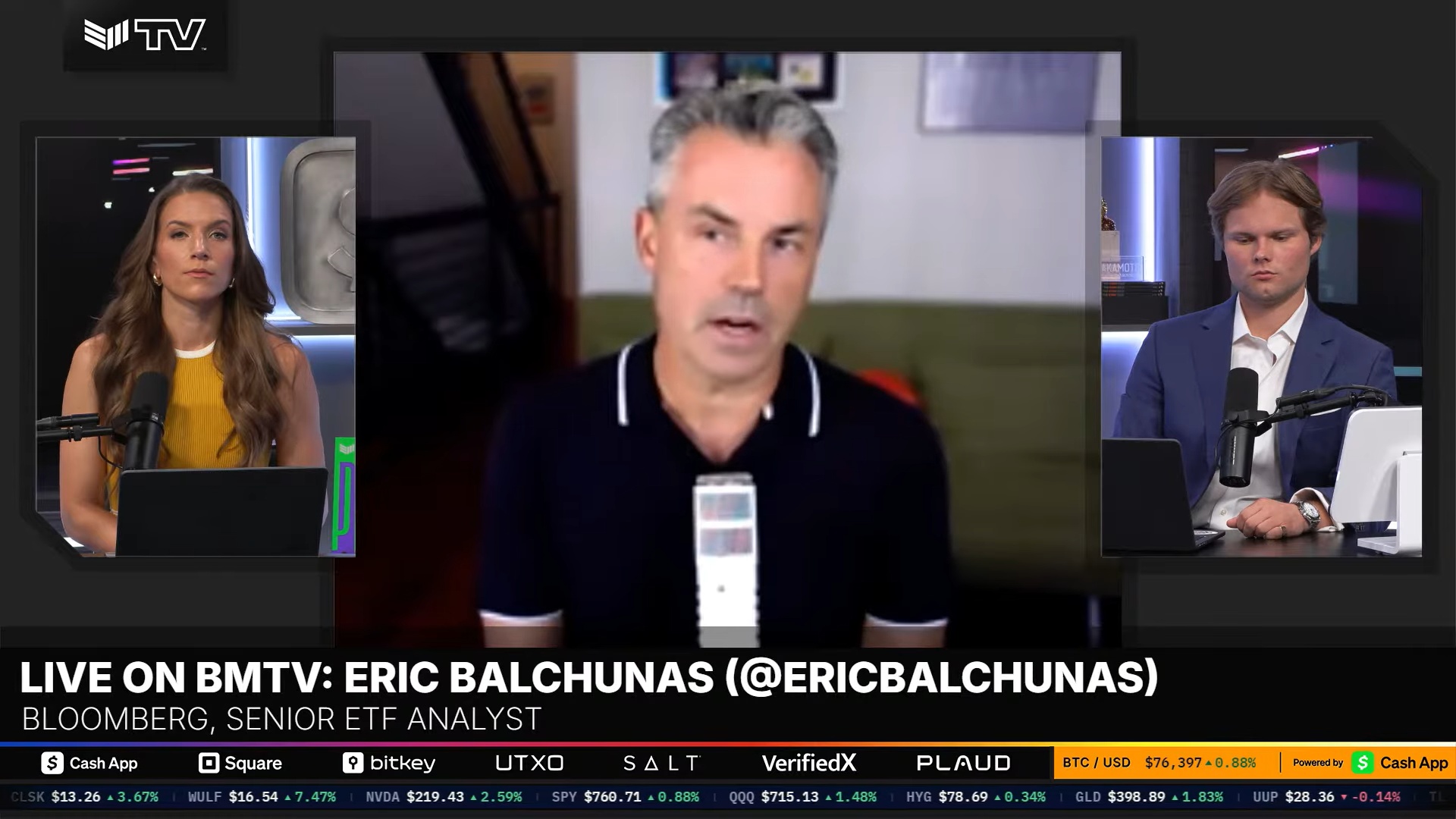
Speaking to Bitcoin Magazine TV on Thursday, Bloomberg senior ETF analyst, Eric Balchunas, said that while bitcoin’s price is currently volatile, things would change in the future.
Bitcoin ETFs debuted in 2024 after a decade of denials from the U.S. Securities and Exchange Commission. The ETFs had the most successful launch in the history of the products and currently manage nearly $100 billion in assets, according to Coinglass data.
JUST IN: Bloomberg Senior ETF Analyst Eric Balchunas says Bitcoin ETFs will ultimately triple gold 👀 "I think as the younger investors get more money and grow up with Bitcoin as their store of value, I do believe that Bitcoin ETFs will triple gold in assets." pic.twitter.com/GU3lp3KIuf
“I always say Bitcoin is like gold as a teenager — you know, gold is 5,000 years old, it was mentioned 450 times in the Bible. I mean that’s old, and Bitcoin is 17 years old.”
Balchunas went on to say that younger generations could end up being drawn to Bitcoin as the government continues to spend wildly and things become to expensive.
He said that right now, Generation Z is rebelling against government deficits and inflation by voting for socialist politicians, but Bitcoin might be a better bet — because the government can’t confiscate it.
One of Bitcoin’s selling points is its censorship resistance but investors appear to be more focused on buying the asset as a way of hedging against currency debasement.
The so-called debasement trade was hot last year and is becoming popular again in 2026 as investors buy non-yielding assets like gold and bitcoin while the dollar becomes weaker.
Balchunas added that as bitcoin’s price becomes less volatile, big institutions will be more interested in buying the asset as a store of value.
“I think that’s when you have the inflection moment where even the big institutions are like, okay, it’s finally ready for me to use as a sort of reliable store of value, possibly even a safe haven and an alternative.”
Asanat Analysis — Why it matters
The claim that Bitcoin ETF assets could eventually triple gold ETF holdings ($200B+) signals structural shifts in generational wealth allocation. Bitcoin's 17-year history now spans multiple market cycles, allowing institutional frameworks (ETFs, custody, regulatory clarity) to mature past the 'emerging asset' phase. Gold ETFs took decades to accumulate their current $200B+ in assets; Bitcoin's faster adoption curve—driven by digital-native demographics and corporate treasury adoption—suggests a plausible but not inevitable path to similar or larger pools.
This narrative matters less for immediate price action and more for infrastructure implications. Sustained ETF inflows would deepen spot market liquidity, reduce custodial risks, and anchor Bitcoin within traditional asset allocation models alongside equities and bonds. However, the comparison assumes Bitcoin achieves gold's role as a non-correlated inflation hedge and store of value—status that requires continued macroeconomic validation and regulatory stability. The framing also reflects analyst optimism that may underestimate friction from future regulatory crackdowns or competing digital assets.