Bitcoin loses touch with the Dollar Index, U.S. stocks ahead of the Fed
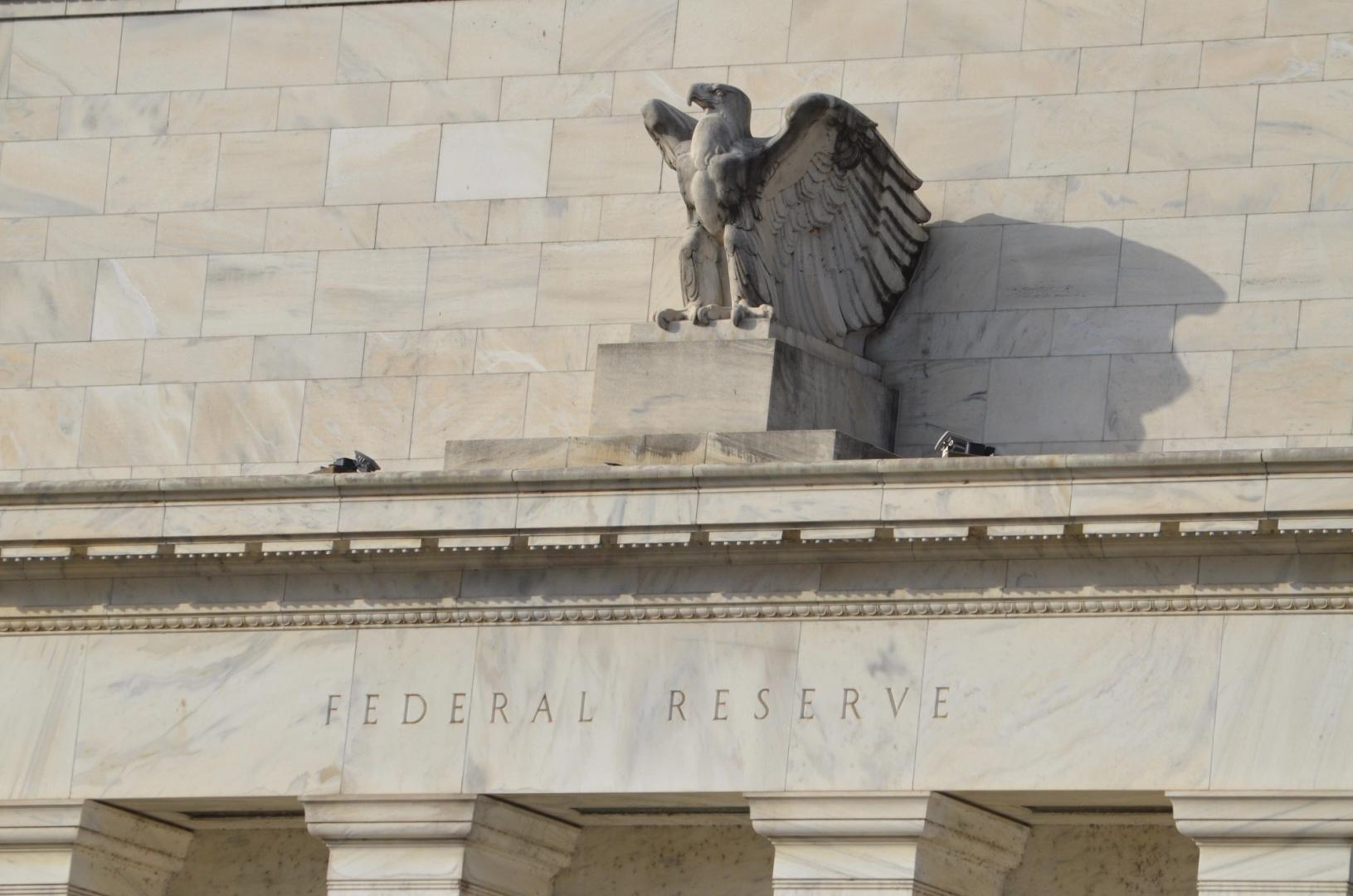
Your day-ahead look for Sept. 16, 2026
This is an excerpt from CoinDesk newsletter 'Daybook.' Sign up here, if you haven't already.
The bitcoin BTC$75,890.85 market turned idiosyncratic ahead of Wednesday’s Federal Reserve interest-rate decision, and is no longer tracking the Dollar Index or U.S. stocks.
CoinMarketCap data show bitcoin’s short-window correlation with the index, which measures the U.S. currency’s strength against a basket of peers, has collapsed to nearly zero, while its positive link to equities has also faded.
“Bitcoin’s short-window [15-day or less] correlation to the dollar index sits at +0.08, versus -0.54 over the past 30 days. Its correlation to the S&P 500 has fallen to 0.43 from 0.75 yesterday, to the Nasdaq to 0.30 from 0.60 yesterday, and to gold to 0.28 from 0.69 over 30 days,” CoinMarketCap’s head of research, Alice Liu, said in a note shared with CoinDesk.
The disconnect is explained by the recent focus on the Clarity Act regulation, which failed a key Senate procedural vote on Tuesday, pulling traders’ attention away from the usual influences in the wider economy.
With those correlations weaker, protective positions that worked recently, notably hedging bitcoin against S&P 500 index futures on the assumption it would keep tracking risk assets, are less reliable for now. (If bitcoin usually tracks U.S. stocks, a long-bitcoin book can be faded, or hedged, by shorting the index futures.)
“That means the beta hedge that would have worked Monday is unreliable today, and today’s FOMC reaction may be swamped by regulatory follow-through,” Liu said.
That sets up the decision, due at 2 p.m. ET, as a test of whether bitcoin re-establishes the relationship with the dollar and stock market or keeps trading off regulatory news.
The Fed is widely expected to raise interest rates by 25 basis points. That move is largely priced in, and most investment banks are still forecasting additional hikes by year-end.
Unless Chair Kevin Warsh delivers a larger increase or unexpectedly hawkish guidance, some observers say the Dollar Index could slide. A weaker dollar would, in isolation, be a tailwind for bitcoin.
Traders should also watch Treasury yields. A sharp rise in yield volatility can tighten financial conditions and revive risk-off flows across crypto.
"The market lull can easily be attributed to expectations of signals from the Fed later on Wednesday, which have greater potential to influence volatility than the 25-basis-point rate hike already priced in," Alex Kuptsikevich, the chief market analyst at The FxPro, said in an email. Stay alert!
Read more: For analysis of today's activity in altcoins and derivatives, see Crypto Markets Today . For a comprehensive list of events this week, see CoinDesk's "Crypto Week Ahead."
Prices held in a tight range above $76,000 until yesterday, when sellers finally broke lower and established a foothold beneath that level.
Chart analysts call this a range breakdown — a bearish signal that often precedes further losses. It’s like a coiled spring finally unwinding: The energy built up while price was compressed in the range is released in the direction of the break, which in this case is down.
As stablecoins move into regulated finance, APAC is becoming a key proving ground. This report maps the region’s rules, use cases, and RLUSD’s role.
Asanat Analysis — Why it matters
Bitcoin's decoupling from traditional macro indicators—dollar strength and equity markets—represents a rare regime shift driven by idiosyncratic regulatory catalysts rather than monetary policy. The collapse in 15-day correlation with the Dollar Index to +0.08 (from -0.54 over 30 days) signals traders are pricing regulatory outcomes as the dominant driver, specifically the failed Clarity Act procedural vote. This creates a tactical asymmetry: standard hedges relying on risk-asset co-movement (shorting S&P 500 futures to hedge long BTC) become unreliable just as the Fed decision looms.
The timing matters structurally. While a 25-bps rate hike is fully priced in, any deviation in Fed guidance or a weaker dollar could traditionally support bitcoin. However, the article signals this mechanism is temporarily overwhelmed by regulatory friction. The 'range breakdown' below $76K on technical charts compounds the dynamic—if the Fed delivers hawkish messaging or Treasury yields spike sharply, the re-establishment of traditional macro correlations could accelerate downside, as risk-off flows would reinforce rather than counter regulatory pessimism.
For market participants, this exposes a structural dependency: crypto's maturation into institutional portfolios assumes stable correlation regimes for portfolio construction. Regulatory uncertainty breaking that correlation exposes basis risks in synthetic hedges and forces active re-hedging, potentially amplifying volatility regardless of the Fed's decision. Watch whether post-announcement flows re-anchor BTC to macro or sustain the regulatory-driven pricing.