Bitcoin Price Rebound Faces a Fresh $82K Test: Will It Survive the Weekend?
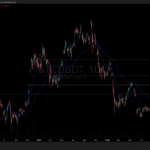
BTC USD trades at $81,965, up 1.67% over 24 hours, after slipping back below the $82,000 handle it reclaimed on Friday morning. The bounce followed US inflation reaching 3.7% and a sharp move in Treasury yields, against a significant flush of leveraged long positions.
That level is doing more work than its round number suggests. Avinash Shekhar, co-founder and CEO of Pi42, notes that $82,000 has acted as both support and resistance for close to 50 days, which makes a weekend close on either side of it genuinely informative.
Thursday’s drop to roughly $79,800 wiped out about $930 million in leveraged positions, with around $780 million of that in longs. On the way back up, roughly $53 million in shorts were liquidated.
That second figure is the one worth noting. Short covering can lift price quickly, but it closes existing positions rather than creating new demand, so part of this week’s recovery came from mechanics rather than buyers.
The order book tells a similar story. Glassnode’s heatmap showed a thick wall of bids resting at $80,000 for much of last week. Those orders were consumed during Thursday’s slide, and the replacement stack that appeared below the level was smaller than the one it replaced.
Not everything points the same way. CryptoQuant’s measure of total whale holdings, which excludes exchange and mining pool addresses, has climbed steeply since September and now sits close to three million BTC, near its highest of 2026. Those wallets were adding while price fell.
“At $82,134, Bitcoin trades about 6.7% above new whales’ cost basis.” – By @MorenoDV_ pic.twitter.com/B7SREdQdTU
One detail argues for patience. Volume fell 23.87% to $30.98 billion while price recovered, so the bounce is arriving on lighter participation than the decline that caused it.
Delta Exchange research analyst Riya Sehgal puts the critical support region at $80,000 to $80,700. A sustained break beneath it would expose $78,000 to $79,500, while reclaiming $82,000 to $83,200 is what would improve the short term structure.
Volatility rose about 7% toward 39 as the market repriced, and weekend sessions carry thinner liquidity by default. That combination tends to produce larger moves on smaller volume, in either direction.
The macro backdrop has not improved either. September CPI came in at 3.7% and producer prices at 6.3%, both above forecast, and the Federal Reserve meets on October 29 with a rate increase still on the table.
Watch the close rather than the wick. Bitcoin has spent a week moving between two levels, and the weekend is the first stretch where neither equity markets nor US data will be setting the direction.
Follow 99Bitcoins on X For the Latest Market Updates and Subscribe on YouTube For Daily Expert Market Analysis.
Established in 2013, 99Bitcoin’s team members have been crypto experts since Bitcoin’s Early days.
Alex is a seasoned cryptocurrency trader and market analyst with over seven years of active experience in the digital asset space. Since entering the markets in 2017, Alex has specialized in identifying emerging "meta" trends and high-volatility narratives. Notably, Alex... Read More
Asanat Analysis — Why it matters
Bitcoin's $82K level functions as a technical inflection point that carries outsized narrative weight in retail markets, even though institutional accumulation often occurs independent of round-number resistance. The 1.67% 24-hour recovery from a dip below this threshold reflects typical weekend volatility mechanics—lower trading volume amplifies both flush-outs and snapbacks. The triggering catalyst (US CPI at 3.7% and Treasury yield movement) matters more than the price level itself, as these data points inform Fed expectations and real-yield calculations that drive macro allocations into or out of non-yielding assets like Bitcoin.
The mention of 'significant flush of leveraged long positions' suggests liquidation cascades contributed to the dip, a pattern that has grown more pronounced as futures open interest concentrates on fewer platforms post-2024. Weekend consolidation after leverage purges often precedes directional conviction in subsequent sessions, though it remains noise unless accompanied by on-chain or institutional flow signals. The real test isn't $82K itself but whether macro conditions—inflation trajectory, yield curve slope, real rates—support a genuine repricing or merely reflect mechanical mean-reversion in thin liquidity.