Crypto traders braced for a total wipeout this week but Bitcoin had other plans
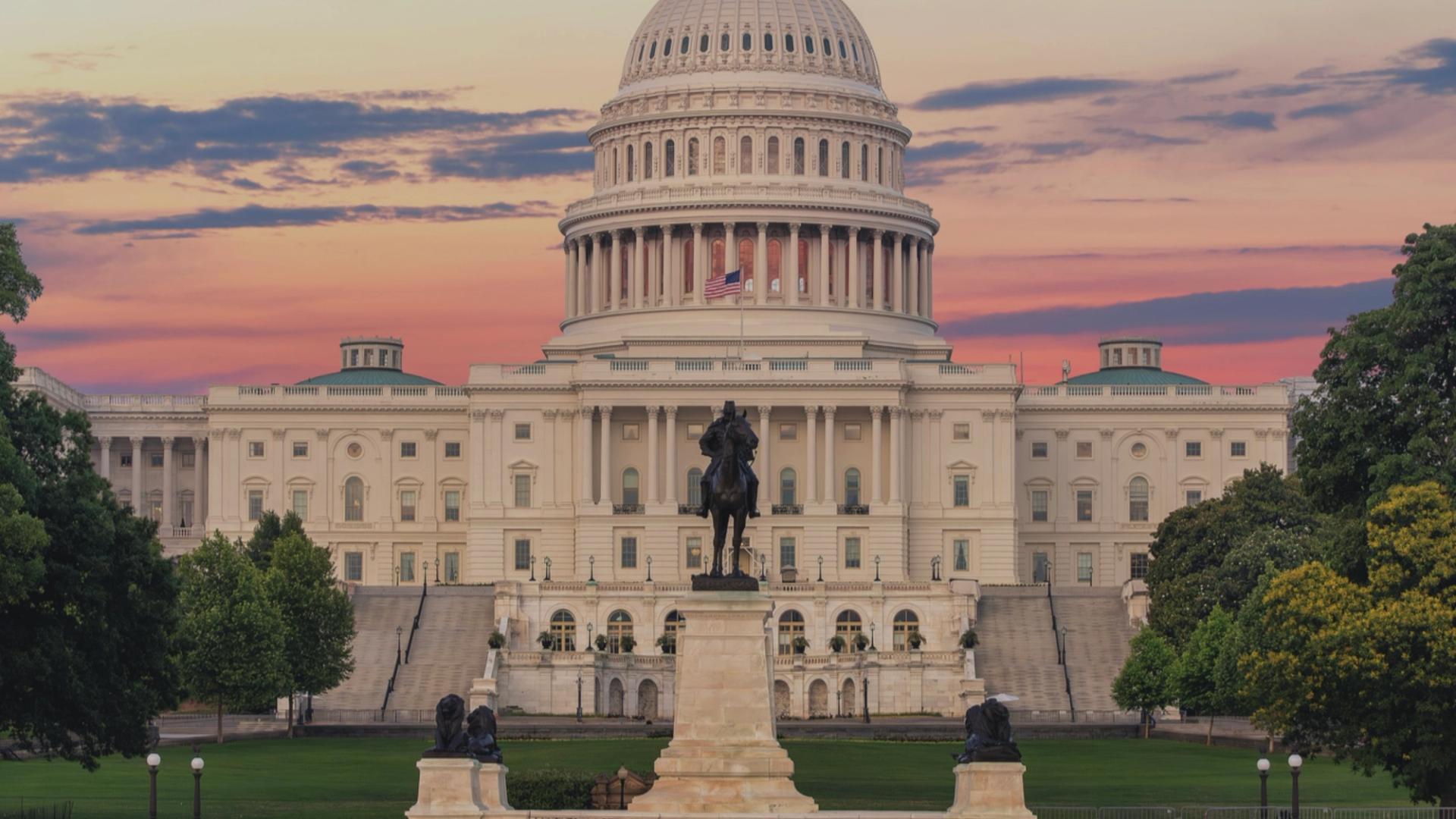
Market experts view bitcoin’s price stability as evidence of its fundamental independence from Washington, maintaining that global liquidity and adoption cycles remain the primary growth drivers.
A week ago, it felt as if the world was about to fall apart for bitcoin and the wider crypto market. Most participants expected a Fed rate hike and the Clarity Act’s failure in the Senate to trigger a sharp sell-off.
But it didn’t—even though the Fed hiked rates and the Clarity Act failed in the Senate. Market participants are split on what drove the resilience and what it means for the near-term outlook.
Ahead of the Senate vote on the night of Sept. 14, bitcoin fell as pre-vote jitters grew and rumors circulated about partisan gridlock over stablecoin yields and the bill’s ethics amendments. However, market analysts believe bitcoin remains insulated from legislative issues and could continue its upward trend.
By the time the senators on Capitol Hill prepared to cast their ballot, bitcoin was already approaching the $75,000 level, where, despite the failure to pass the key crypto bill, it appeared to shrug off the outcome.
Derivatives traders largely anticipated the Senate’s failure to approve the law, according to Jag Kooner, head of derivatives at Bitfinex. The modest spot reaction reflects a market that was already not positioned for a legislative breakthrough, he said.
"There was little evidence that traders had positioned themselves for its passage ahead of the vote," Kooner noted. "With few market participants betting on the bill’s approval, there were correspondingly few positions to unwind. The more important consequence is that the industry remains without clear statutory rules, prolonging regulatory uncertainty."
The spot price remained resilient even though the 49-50 Senate cloture vote failure triggered an immediate wave of violent liquidations. In the first 24 hours after the vote, crypto traders holding long, or bullish, futures positions saw $571 million liquidated. It also hit U.S.-focused crypto infrastructure providers, with publicly traded firms like crypto exchange Coinbase Global (COIN) and stablecoin issuer Circle Internet (CRCL) sliding 10% in the aftermath of the vote. Both shares rebounded Friday.
Ilya Kalchev, an analyst at Nexo Dispatch, said bitcoin’s recovery after the Clarity vote, the Federal Reserve’s rate hike, and the long liquidation event point to consolidation rather than an immediate breakout.
“Bitcoin’s next move is now linked to a catalyst that it does not have yet,” Kalchev said. “Having absorbed three separate shocks this month without a real repricing, the more likely near-term path is range-bound trading rather than a breakout.”
Kalchev said $77,950 is the first level bitcoin needs to clear, followed by $79,300 and $80,000. A move above $80,000 could open the way to $81,400, while a fall below $75,000 would put the recovery in question.
The regulator story favors upside. After Senate’s rejection of the Clarity Act, analysts expect the SEC and CFTC to deliver the goods, meaning the cryptocurrency regulation in the U.S. is shifting entirely from a permanent, statutory approach to an agency-driven, rule-based approach.
Digital-assets executives expect the Securities and Exchange Commission (SEC) and the Commodity Futures Trading Commission (CFTC) to continue using their existing authority to set rules for the industry. That regulatory progress began Thursday, with the SEC issuing a temporary, conditional Innovation Exemption for eligible crypto platforms, allowing users to trade tokenized U.S. stocks.
The SEC’s action to facilitate tokenized stocks demonstrates that regulatory progress can continue despite the Clarity setback, said Luke Davis, founder and chief market strategist at Bull Market Blueprint.
“The SEC’s move gives investors a reason to look beyond the failed vote. I expect bitcoin to finish the year higher, with liquidity conditions and the debasement trade carrying more weight in my forecast than the timing of any individual bill,” Davis said.
For Matt Hougan, CIO at Bitwise Asset Management, the U.S. still has two and a half more years of a pro-crypto regulatory regime, during which the industry can continue to move forward.
Hougan remains bullish on crypto. “I don't think it will stop investors from considering smaller-cap assets with strong tokenomics and links to real-world assets.”
However, he added, “had the Clarity Act passed the Senate vote, I think crypto would have been the consensus ‘smart money trade’ in Q4, and prices would have ramped back toward all-time highs.”
But because it failed, “I think the road ahead is bumpier,” Hougan said. “I don’t think it’s changed too much from where it was Monday before the vote.”
Hougan said the Clarity Act was and remains irrelevant to bitcoin, so if bitcoin’s price continues to drop, it has more to do with sentiment than fundamentals. “If bitcoin sells off in the short-term due to Clarity Act vibes, I’d consider that an opportunity,” he said.
Vineet Budki, managing partner and CEO of Sigma Capital, said bitcoin’s recovery and the long-liquidation flush do not yet establish that the bottom is in.
“I’m not ready to make that call,” Budki said. “I’d rather give it a quarter and let the price action speak before taking a firm directional view.”
Budki said bitcoin’s four-year cycle still needs to play out and warned that elevated interest rates and a slowing U.S. housing market could yet push investors toward risk aversion. “So my stance is to hold and wait. I’m not leaning firmly bullish or bearish right now.”
The September jobs report on Oct. 2 and the Consumer Price Index release on Oct. 14 are the next tests, Kalchev said. Sustained ETF inflows or renewed spot buying would be the clearest sign that bitcoin is preparing to break out of its range.
Bitcoin is like a honey badger that does not rely on regulation, said Mati Greenspan, a market analyst and founder of Quantum Economics. “It’s resilient and certainly doesn’t depend on any government or its legislation.”
Asanat Analysis — Why it matters
Bitcoin's resilience during a period of expected volatility signals maturation in market structure. The phrase 'total wipeout' typically references either macro fears (rate shocks, geopolitical escalation) or regulatory threat. That BTC held steady despite these headwinds suggests institutional positioning has become less reactive to Washington-centric narratives—a structural shift from 2021-2023 when policy pronouncements moved markets intraday.
The attribution to 'global liquidity and adoption cycles' over regulatory cycles reflects a reframing of Bitcoin's price discovery mechanism. This matters because it implies the market now prices in a baseline of regulatory friction rather than treating it as tail risk. If true, it reduces volatility from surprise policy announcements and increases predictability around macro cycles (Fed policy, corporate treasury rotation, sovereign reserve adoption). It also signals confidence among large traders that regulatory clarity, while evolving, no longer poses existential risk.
Watch whether this decoupling persists through actual policy announcements. Markets often front-run consensus, then reprice when rhetoric meets reality. Stability this week doesn't guarantee it through a G7 coordinated stance or individual country framework changes—but it does suggest sophisticated traders are pricing Bitcoin's narrative as increasingly independent from quarterly political cycles.