Deus X Capital’s Tim Grant on cutting through the crypto hype
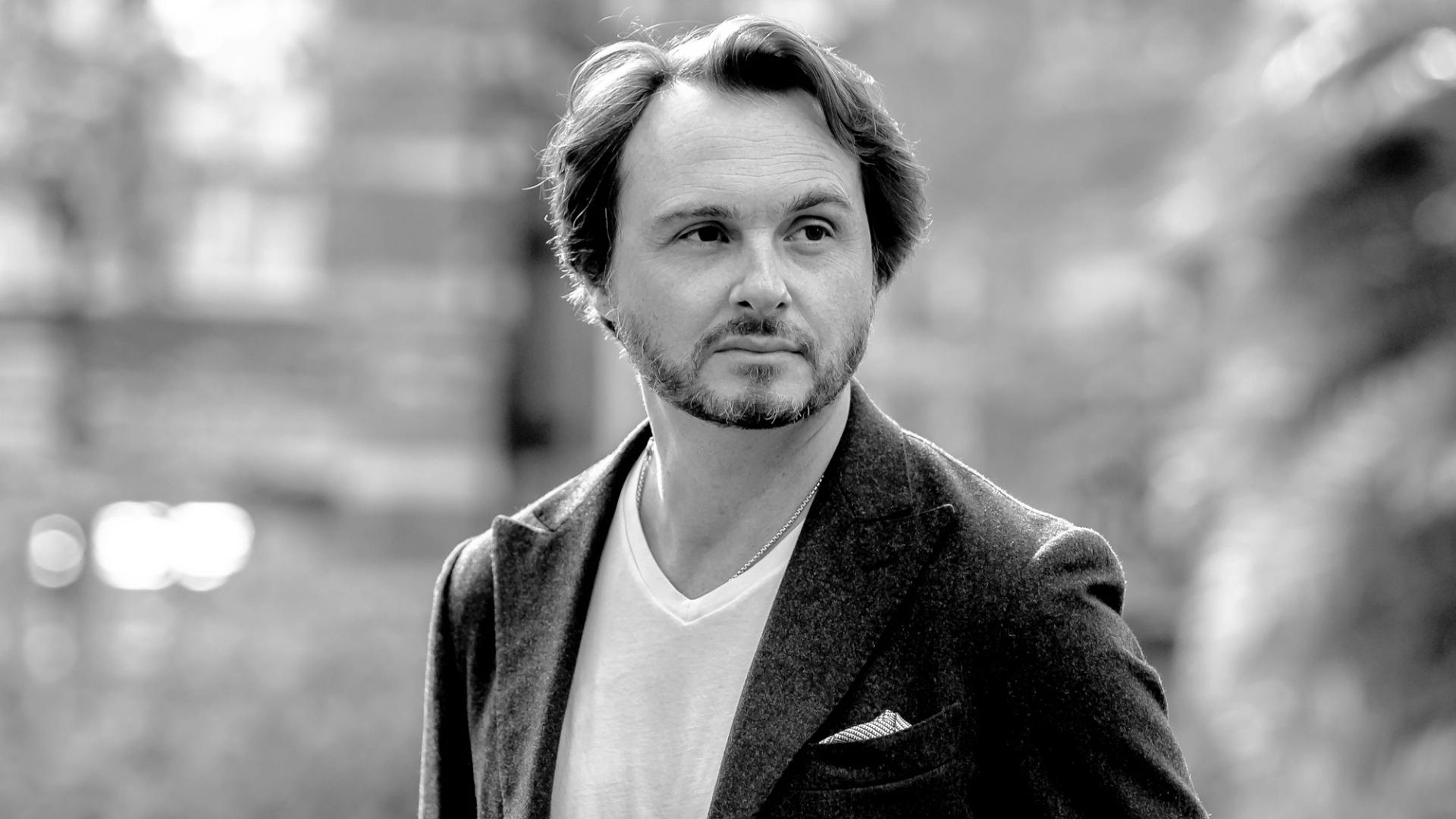
The Deus X CEO discussed his journey into digital assets, the company's infrastructure-led growth strategy, and why his Consensus Hong Kong panel promises "real talk only."
Deus X Capital's Tim Grant wants real talk only when he's speaking to others in the crypto industry.
Deus X is a family office-backed investment and operating company that focuses on unlocking value across capital markets, fintech and digital assets to help build a fairer, more accessible financial system.
Led by CEO Grant, Deus X began with roughly $1 billion in assets and operates globally with offices in London, Malta and the UAE. Grant will be speaking at CoinDesk's Consensus Hong Kong conference in February 2026.
The firm deploys capital through private equity, venture capital, venture building and fund allocation, backing and building innovative companies that span everything from trading infrastructure and broker-as-a-service platforms to digital asset ventures.
"What I saw was a powerful new toolset and the opportunity to address those inefficiencies in a practical way, faster settlement, lower costs, greater transparency, not by replacing traditional finance, but by integrating with it," Grant said about his entry into crypto.
Early on in his career, and with no prior knowledge of bitcoin BTC$88,360.89 or blockchain, he said he was lucky enough to meet with the executive teams of both Ripple and Coinbase (COIN) in San Francisco, and that’s where everything changed for him. By the end of 2015 he was in the digital asset space and has been there ever since.
"Our growth strategy at Deus X is deliberately hands-on and infrastructure-led," he said. "We believe that the combination of both investing and operating is a powerful combination when it comes to executing on growth and generating strong risk-adjusted returns."
Grant said that means building, backing and operating companies across multiple layers of the digital finance stack, from payments and treasury to institutional DeFi, prime services, market infrastructure and execution tooling.
Through businesses like Deus X Pay, Cor Prime and Solstice, Deus X's venture portfolio is expanding, he said, with each company targeting specific problems but largely working together to compound growth and share infrastructure.
For Grant, Consensus is about substance rather than spectacle, he said, and given his broad portfolio of investments and companies, he said the companies are always operating across the entire spectrum, both as a provider of capital and as investors in their own ventures.
"We’re looking to engage with institutions, regulators and builders who are focused on deploying digital finance in production, particularly around regulated payments, treasury, tokenization, prime services and institutional DeFi," he said.
KuCoin captured a record share of centralised exchange volume in 2025, with more than $1.25tn traded as its volumes grew faster than the wider crypto market.
Solana’s new phase is ‘much more about finance,’ says Backpack CEO Armani Ferrante
The Solana ecosystem has spent the past year doubling down on a financial infrastructure, Backpack CEO Armani Ferrante told CoinDesk.
Asanat Analysis — Why it matters
Deus X Capital's positioning reflects a maturation signal in institutional crypto adoption: the shift from speculative asset accumulation to regulated infrastructure deployment. Grant's emphasis on 'integration with traditional finance' rather than replacement, combined with the firm's $1B+ AUM and multi-geography footprint (London, Malta, UAE), indicates institutional capital is increasingly comfortable with hybrid finance models. This contrasts sharply with 2017-2021 narratives around blockchain as a pure disruptor, suggesting regulatory clarity and operational maturity have reframed how serious capital allocators view the sector.
The infrastructure-first strategy—spanning payments, prime services, institutional DeFi, and tokenization—mirrors a sector-wide pattern: winners emerge by solving operational bottlenecks rather than chasing narrative-driven token launches. Deus X's portfolio model (operating Deus X Pay, Cor Prime, Solstice) suggests conviction that vertical integration across the fintech stack compounds defensibility. This approach implicitly signals skepticism toward standalone protocol plays without institutional product-market fit, and validates the venture-operating hybrid as a preferred risk-adjusted vehicle for navigating regulatory fragmentation.
Grant's explicit focus on 'real talk only' at Consensus Hong Kong indicates broader industry fatigue with hype cycles. For infrastructure-focused firms and institutions evaluating partnerships, this signals a tightening filter for quality-of-discourse in the sector—a proxy for distinguishing serious builders from marketing-driven projects.