How months of work on the Clarity Act all fell apart
Interviews with industry participants and legislative aides paint a picture of a blown bill-writing process, with sources pointing to nearly every facet of the bill's development and the debate around...
The bill faced an uphill battle from launch; numerous political, policy and social factors would have needed to fall into place for it to succeed. In the end, a variety of issues combined to continually decrease the odds of its passage over the past year. Ultimately, the bill saw bipartisan opposition when it hit the Senate floor for a key make-or-break procedural vote earlier this month, and its future is now in limbo.
According to interviews conducted with more than a dozen industry participants and legislative aides over the past 10 days — some of whom spoke on condition of anonymity so they could talk candidly about this fraught process — a confluence of factors killed the Clarity Act.
The Senate ignored the House of Representatives' own Digital Asset Market Clarity Act, which had passed with a massive bipartisan vote; the Senate version was constructed in a piecemeal fashion; U.S. President Donald Trump and his White House complicated the negotiations; the crypto industry conducted a scattershot engagement with lawmakers throughout the process; Democrats rejected an ethics deal they felt fell short of their demands; and time was not on lawmakers' side as they headed into a midterm election.
The result is that, despite a massive campaign and lobbying operation that resulted in "the most pro-crypto Congress in history" after the 2024 election and the passage of a key stablecoin bill last year, the crypto industry's top priority for legislation — market structure reform — remains out of reach.
The Digital Asset Market Clarity Act was aimed at clearly defining how the industry’s two main regulators, the U.S. Securities and Exchange Commission and the Commodity Futures Trading Commission, would oversee the roughly $3 trillion and growing crypto sector. While last year's Guiding and Establishing National Innovation for U.S. Stablecoins Act (GENIUS) outlined how federal regulators should oversee stablecoins specifically, this broader market structure bill has long been desired by the industry for a few reasons.
For one thing, crypto spot markets currently exist in a sort of federal regulatory gray zone. The CFTC does not have spot market authority over these markets outside of outright fraud and related derivatives products. For another, the SEC had never previously issued formal rulemakings outlining how it would oversee crypto-related securities products, and many leaders in the sector were panicked by former Chair Gary Gensler's effort to corral crypto spot trading platforms into an existing securities regulation framework. There is also no explicit authority delineating where the SEC's authority ends and the CFTC's authority begins.
In the absence of this legislation, the agencies began to lay out how they view the crypto markets in joint advisories published earlier this year, but a crypto market structure bill could sort out all of these issues in a much more legally tangible — not to mention durable — way.
It's difficult to say whether the Clarity Act vote failed solely due to the controversial section that sought to limit senior government officials — namely, Trump — from personal crypto ties, but ethics concerns hung over the bill throughout its conception and development and remain one of the dominant talking points around this entire debate.
Democrat concerns about President Donald Trump's crypto business ties stretch back to 2025. In May of last year, Sen. Ruben Gallego and eight other Democrats said they would not vote for the GENIUS Act because of how Trump was profiting off the sector. Ultimately, those lawmakers did vote for the bill with marginal changes, but it was always clear that the Trump family’s crypto dealings — which include World Liberty Financial, the $TRUMP memecoin and mining firm American Bitcoin — would weigh on future market structure discussions. At the time, Trump told "Meet the Press" that he was "not profiting from anything … I want crypto because a lot of people, you know millions of people want it." More recently, in his June financial disclosure, he admitted to making $1.4 billion from his various crypto ventures during his first year back in office — more than half of the $2.2 billion total he raked in in 2025.
The goal for Democrats was to restrain Trump from so blatantly profiting off of the crypto sector, which had in turn poured millions into the president's 2024 campaign, inaugural balls, a ballroom to replace the demolished White House East Wing, a military parade and his political action committee.
While the goal of the ethics provision has been described as generically applying to all present and future presidents and senior government officials, it's specifically Trump's crypto business ties that have alarmed Democrats. These concerns have been consistent since Trump's return to office last year, multiple people said, with one person saying the Democrats writ large "actually care about this stuff."
The crypto industry should not have been surprised by the conviction Democrats had on the ethics piece, this person said.
In May, Sen. Kirsten Gillibrand, a longtime crypto champion who has cosponsored multiple bills addressing the sector, told CoinDesk's Consensus 2026 attendees that the bill would not advance without an ethics provision. Similarly, Sen. Angela Alsobrooks, who voted for the bill during a hearing in the Senate Banking Committee, said at the time that she would not vote for further advancement without additional work.
Even industry participants expected a clear deal on the ethics provision before a floor vote — so-called because it takes place on the Senate floor, with all 100 senators expected to participate. Cody Carbone, head of the Digital Chamber, told reporters after the Banking Committee advanced the bill in May that he expected "the deal will be completed before this goes to the floor, because they'll want to only bring it to the floor if they feel confident they've got 60" votes.
Lawmakers from the two parties ultimately did not agree to any such deal. The White House and Senate Republicans published a few proposals; Senate Democrats sent counteroffers; and Sens. Thom Tillis and Gallego even pitched a bipartisan counterproposal earlier in the year. The three parties were unable to reach a consensus agreement prior to this month's floor vote.
Multiple people pointed to Trump's June financial disclosure as the event that really supercharged these concerns by giving politicians an easy-to-grasp headline figure in their push to force Trump to sell off his crypto holdings.
"I think politics was very clearly elevated over policy," said Stu Alderoty, the chief legal officer at Ripple Labs. "It was good policy, and the industry needs to get better at politics."
Ron Hammond, the head of policy and advocacy at Wintermute, pointed to the fact that both Gallego and Alsobrooks ultimately voted against the bill on the floor as a sign of just how near the election is, and how that's overshadowing everything else. Still others noted that Gillibrand, likewise, had voted against the procedural motion. Even sympathetic Democrats couldn’t risk being seen as soft on Trump’s corruption with an election around the corner.
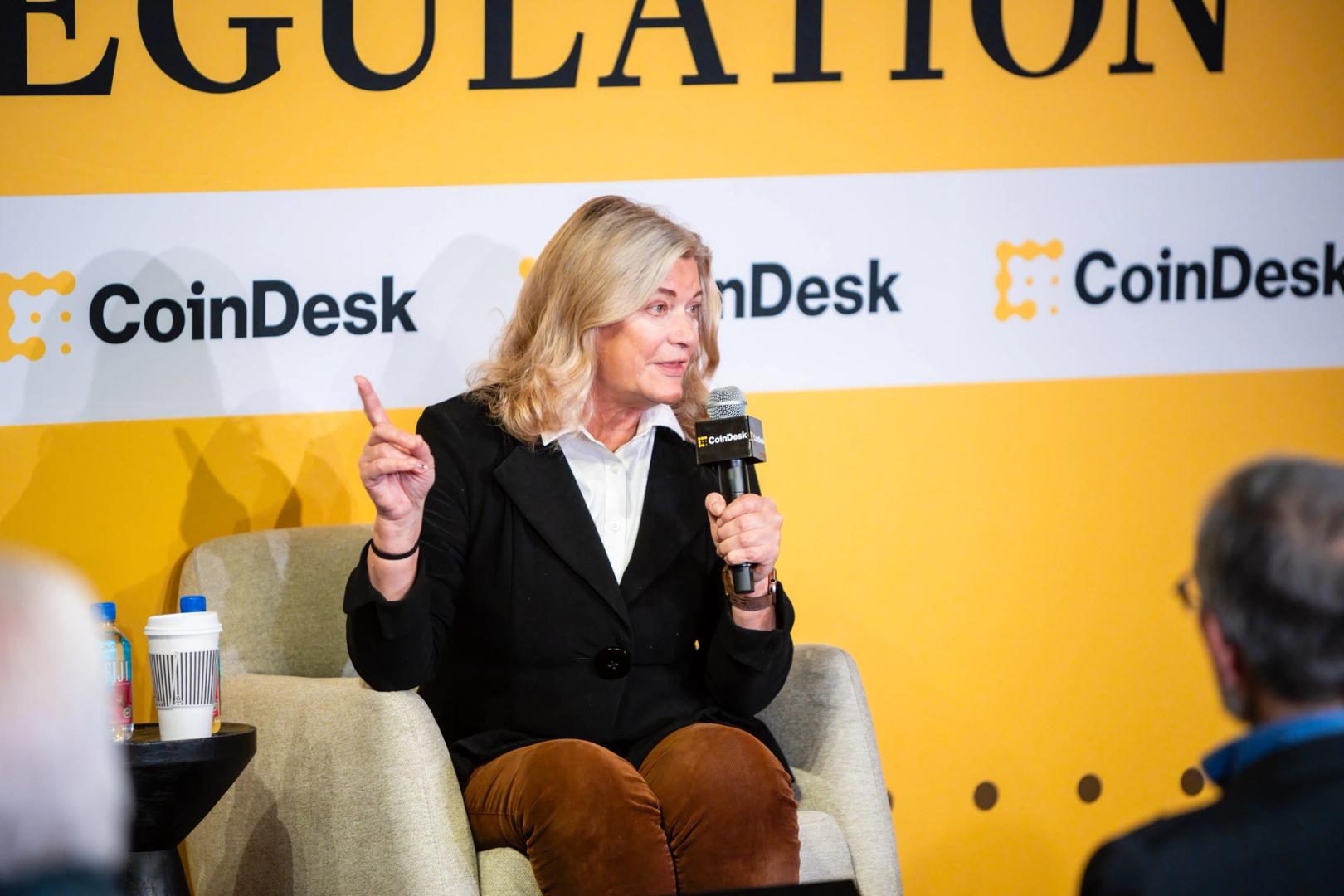
Speaking at CoinDesk's Policy & Regulation event last week, Rep. Ritchie Torres put the blame on Trump’s crypto activity.
"My personal opinion … even though the failure of Clarity had multiple causes, I am convinced that if it were not for Donald Trump, we likely could have seen both Democrats and Republicans get to yes," he said. "Once the president issued his personal memecoin, that created a political problem for Democrats."
The industry's involvement in the legislative process has also been under scrutiny. Last week, The Wall Street Journal reported that industry insiders laid some portion of the blame for the failed vote on Coinbase and its CEO Brian Armstrong, after Armstrong publicly withdrew support for the Senate Banking Committee's version of the bill ahead of a key vote in January.
One of the key issues, Armstrong said, was that the version of the bill was problematic with how it treated stablecoin yield and rewards. The delay kicked off a months-long fight between the crypto and banking industries, while lawmakers sought to find a compromise. It's not clear that other outstanding issues were debated much during the yield fight.
Industry figures and Sen. Cynthia Lummis rallied to Coinbase's defense after the Journal's report came out, but industry participants told CoinDesk they saw Armstrong's tweet and the subsequent months-long fight over stablecoin yield and rewards as being harmful to the overall cause of getting Clarity passed.
One individual involved in crypto lobbying said if the ethics proposal released earlier this month had come out in the spring, it would have likely raised the odds of a successful vote.
Asanat Analysis — Why it matters
The Clarity Act's collapse signals a broader structural problem in crypto legislative efforts: the lack of durable consensus among fragmented stakeholder groups. When a bill loses backing from industry participants simultaneously with legislative aides, it typically indicates that negotiating positions became irreconcilable—often around custody standards, stablecoin treatment, or DeFi protocol liability frameworks. The months of work suggest this wasn't a speed bump but rather a fundamental misalignment on what 'clarity' actually means to exchanges, custodians, DeFi developers, and regulators.
This matters because regulatory vacuum persists. Failed legislative attempts create a chilling effect: projects become more risk-averse, institutional capital delays entry decisions, and enforcement-focused regulators (SEC, CFTC) gain de facto rulemaking power through litigation instead. The crypto industry frequently underestimates how a botched bill can paradoxically strengthen the hand of agencies it was designed to constrain. Future attempts will require either stronger pre-consensus building or a narrower scope—trading breadth for passage odds.