Live updates: Bitcoin below $84,000 ahead of PCE inflation data, Micron earnings
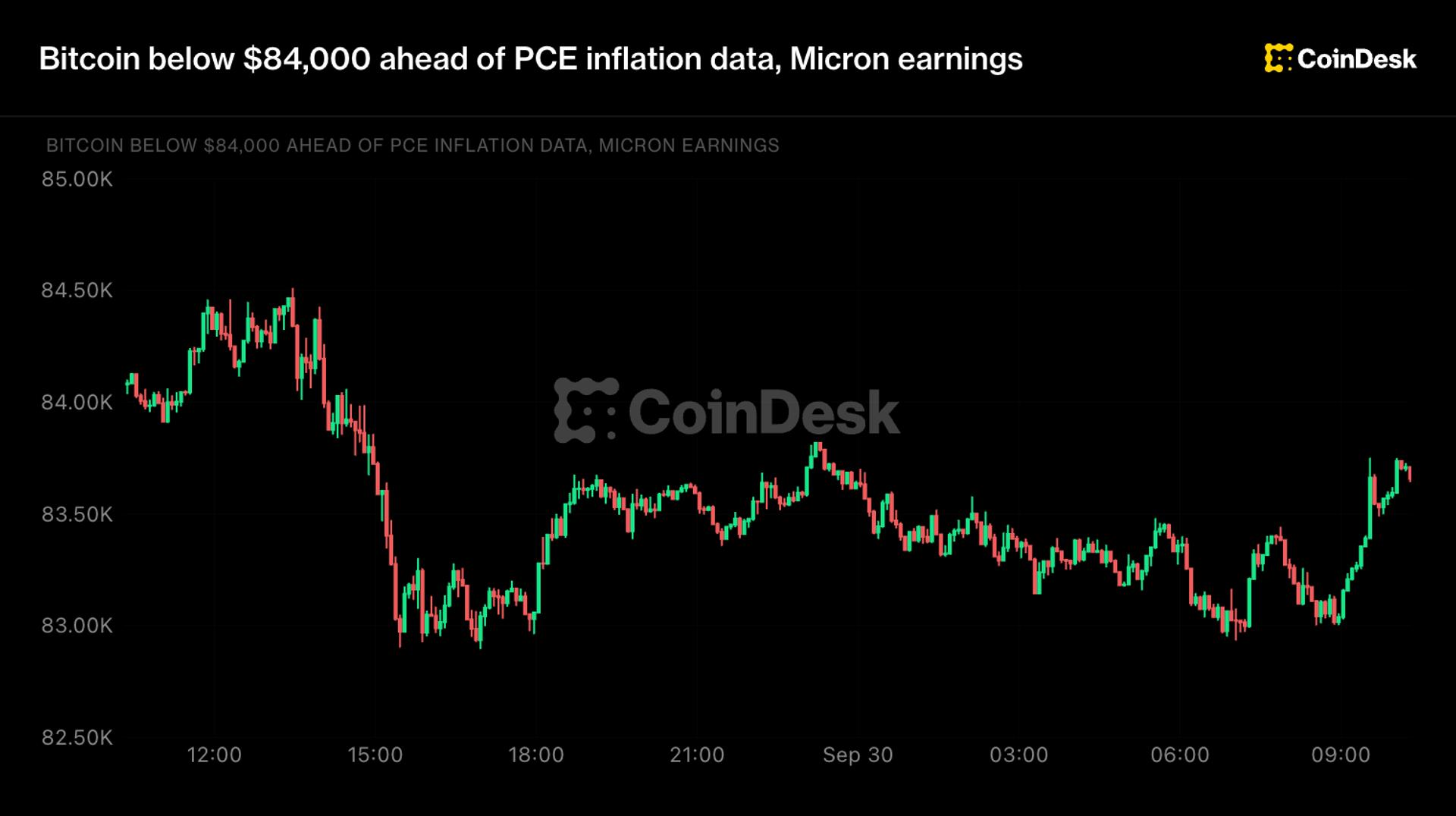
Traders are waiting on the Fed's favored inflation gauge after a month of oil-driven rate-hike bets that sent 30-year Treasury yields to their highest since 2002.
Bitcoin slipped 0.3% to about $83,700 early Wednesday, U.S. time. Traders are waiting on the personal consumption expenditures (PCE) price index, the Federal Reserve's favored inflation gauge, which is expected to show inflation quickened in August.
A higher-than-expected inflation reading would add to the bets on rate hikes that drove a bruising bond selloff this month. Brent crude rose above $103 a barrel and is up about 14% in September, even though Middle East crude flows are returning to pre-war levels. Treasuries steadied a day after 30-year yields hit their highest since 2002, and the dollar held near its highest since July.
Ether fell 0.7% to about $2,690. HYPE dropped nearly 2%, the worst among the majors, while XRP and TRX each added under 1%, according to CoinDesk data.
Onchain analysis firm CryptoQuant estimates that bitcoin's spot demand has shrunk by about 170,000 BTC over the past 30 days. Growth in futures demand has dropped 90% since Sept. 14.
Micron Technology reports after the U.S. close. Its results are a test for the AI-linked stocks that kept the S&P 500's losses in check through the bond selloff.
Asanat Analysis — Why it matters
Bitcoin's retreat below $84,000 reflects macro positioning ahead of PCE data, the Federal Reserve's preferred inflation metric. The timing matters: after a month where oil-driven rate-hike expectations pushed 30-year Treasury yields to 2002 highs, markets are recalibrating on inflation signals. This creates a two-way risk for crypto—a hotter PCE could trigger flight-to-safety selling, while cooler data might ease terminal rate concerns that have anchored BTC sideways for months.
The Micron earnings signal matters for the broader risk-on picture. Tech earnings season influences whether institutional capital rotates into risk assets or defensive positions, which cascades into crypto allocation decisions. Treasury yields at 22-year highs also compress risk asset valuations; if PCE disappoints hawkish expectations, the yield repricing could unlock upside, but sustained high rates continue to penalize leveraged crypto positions and increase funding costs.
This setup illustrates crypto's evolving macro tether: Bitcoin now trades as a risk asset correlated to growth and real rates rather than as inflation hedge. The lack of conviction below $84,000 suggests traders are hedging until clarity emerges on whether recent rate-hike bets stick or reverse based on incoming data.