Live updates: Bitcoin sinks below $83,000 as Iran talks stall and oil climbs
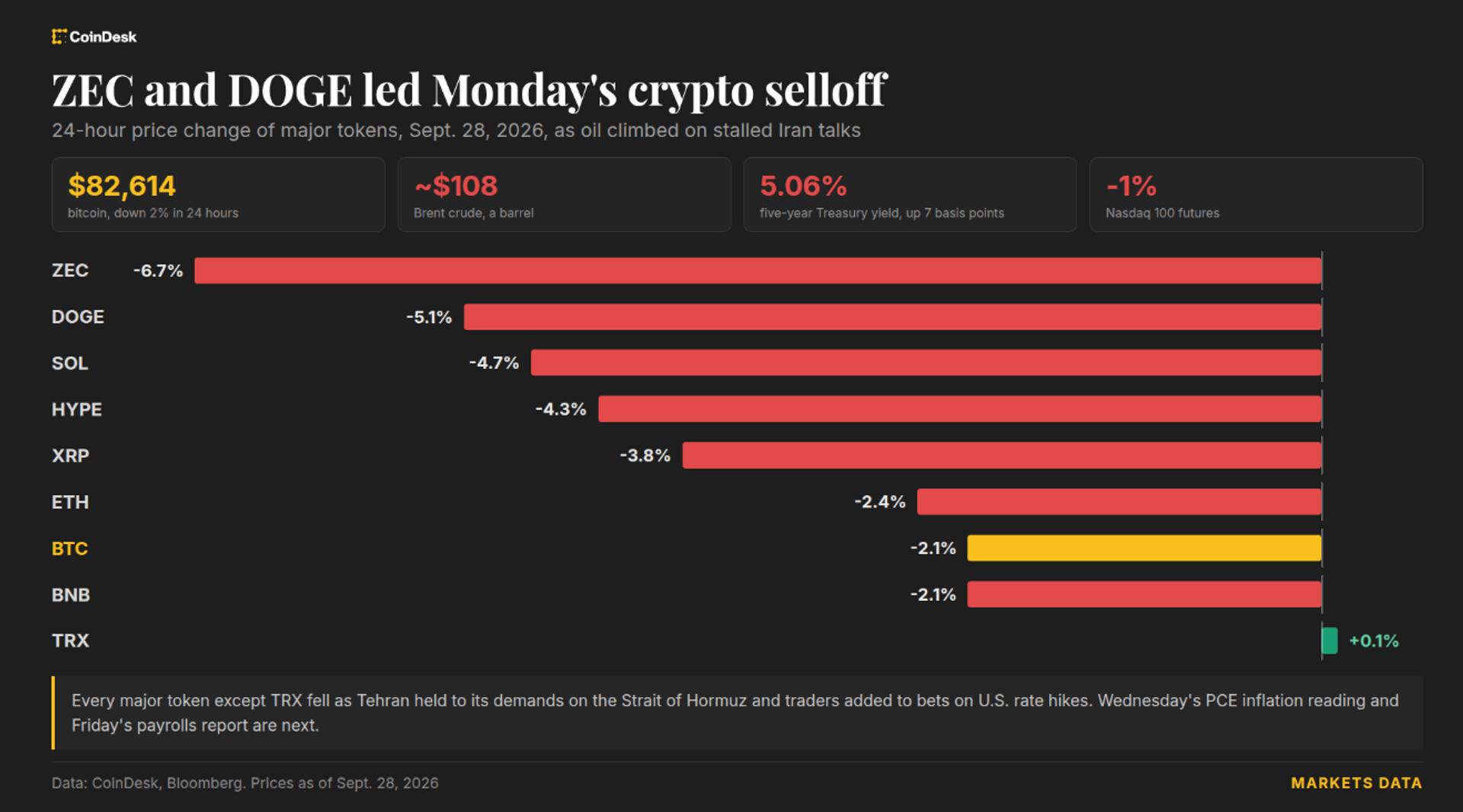
ZEC led losses among major tokens as Brent pushed toward $108 and traders added to bets on another Fed rate increase ahead of this week's inflation and jobs data.
Bitcoin traded near $82,600 on Monday, down 2% over 24 hours, CoinDesk data show. ZEC fell 7% to just above $1,540 and DOGE 5% to about 9 cents, while SOL and HYPE each lost more than 4%. Ether, BNB and XRP dropped between 2% and 4%. TRX held flat.
Brent climbed toward $108 a barrel after Tehran refused to soften its demands for reopening the Strait of Hormuz and President Donald Trump sent mixed signals on further talks.
Treasuries fell across the curve, with the five-year yield up seven basis points to 5.06%, as traders added to bets on U.S. rate hikes ahead of Wednesday's reading of PCE, the inflation gauge the Federal Reserve watches most closely. Nasdaq 100 futures dropped 1%, chipmakers led declines in Asia and gold fell by the most in a month.
"Bitcoin's pullback from last week's highs is more likely a risk-off squeeze following a sharp four-day rally, profit-taking, and a $500 million-plus liquidation wave. This clashed with 10-year Treasury yields at their highest since 2007 and still-elevated oil prices, which together keep inflation sticky and another Fed hike in play," Dan Khus, chief analyst at LVRG Research, said in an email to CoinDesk.
"Key events traders are watching this week include Wednesday's PCE and Friday's payrolls, which can push BTC to reclaim the mid-$80,000s or determine whether yields and energy keep risk assets on the backfoot," he added.
Asanat Analysis — Why it matters
Bitcoin's pullback below $83K reflects sensitivity to macro crosscurrents rather than crypto-specific weakness. Rising oil prices (Brent toward $108) typically signal either geopolitical risk premium or demand concerns, while stalled Iran negotiations remove a potential supply-side relief valve. Traders repositioning ahead of CPI and jobs data suggests the market is pricing in lingering inflation, which historically pressures risk assets despite being hawkish for rates.
The outperformance of losses in privacy coins like ZEC indicates a flight toward defensive characteristics rather than fundamental weakness in the broader market. This pattern—where anonymity-focused tokens decline when macro uncertainty rises—has preceded both capitulation phases and consolidation periods. The combination of higher oil, potential Fed tightening expectations, and geopolitical tension creates a macro ceiling for risk assets that crypto has yet to decouple from, a dynamic that persists across multiple market cycles.