Macro fears mask Ethereum’s momentum, SharpLink CEO says
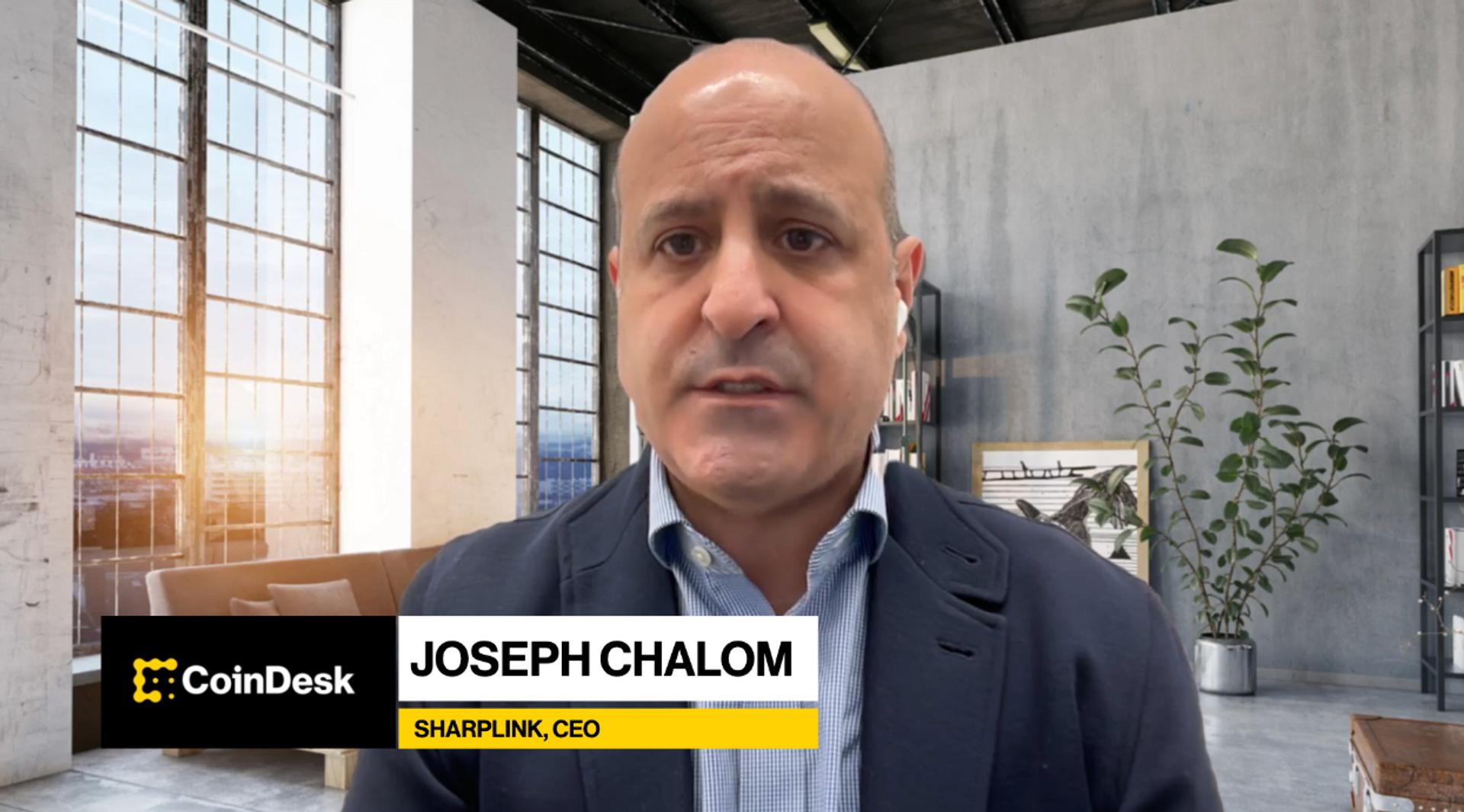
SharpLink CEO Joseph Chalom argues that macro uncertainty is hiding a massive institutional shift toward Ethereum-based tokenization.
The context: Former BlackRock Head of Digital Assets Strategy, and SharpLink CEO, Joseph Chalom says institutional giants are betting heavily on Ethereum to serve as the global infrastructure for asset tokenization, ignoring current price stagnation.He outlines three key drivers for a projected 10x surge in Ethereum activity this year:
Reading between lines: Stagnant crypto prices stem from "OG" whales exiting and speculative capital rotating into commodities.
What comes next: Artificial intelligence and "task-specific agents" are poised to transform Ethereum into a fully autonomous machine economy.
Latest developments: SharpLink is pioneering a new model for public companies by deploying treasury assets into institutional-grade DeFi.
KuCoin captured a record share of centralised exchange volume in 2025, with more than $1.25tn traded as its volumes grew faster than the wider crypto market.
One proposed fund will attempt to exactly mimic the CoinDesk 20, but the other would track the index, excluding bitcoin.
Asanat Analysis — Why it matters
Chalom's thesis—that institutional tokenization demand is obscured by macro headwinds—reflects a real bifurcation in crypto markets between on-chain fundamentals and price action. The claim that 'OG whales' are exiting while institutions quietly accumulate Ethereum positions is plausible given 2024-2025 patterns of stablecoin inflows to institutions and rising on-chain activity despite price stagnation. However, the framing inverts typical causality: macro uncertainty (Fed policy, equity volatility) directly suppresses risk asset valuations regardless of underlying adoption metrics.
The ERC-8004 protocol and 'digital twin' wallet architecture represent legitimate infrastructure expansion, but projecting '10x activity' hinges on speculative AI-agent adoption timelines that remain unproven at scale. Ethereum's quantum-resistance roadmap and tokenization use cases (RWA, treasury management) are real secular trends, yet they compete with competing L1s and private blockchains also pursuing the same institutional mandates. The SharpLink pivot to corporate treasury DeFi deployment is notable as a marquee signal, but a single firm's decision does not validate sector-wide institutional rotation.
This narrative usefully separates hype cycles from infrastructure development, but conflates medium-term technical readiness with near-term price catalysts. If true, it suggests 2026 outcomes depend on macro normalization (allowing risk capital to re-enter) *and* ERC-8004 adoption velocity—both contingent factors. The KuCoin and CoinDesk 20 fund references feel tangential; they signal market structure maturation but do not directly validate Ethereum's institutional capture thesis.