Securitize brings Apple, Nvidia and Tesla to Solana, with NYSE trading in the works
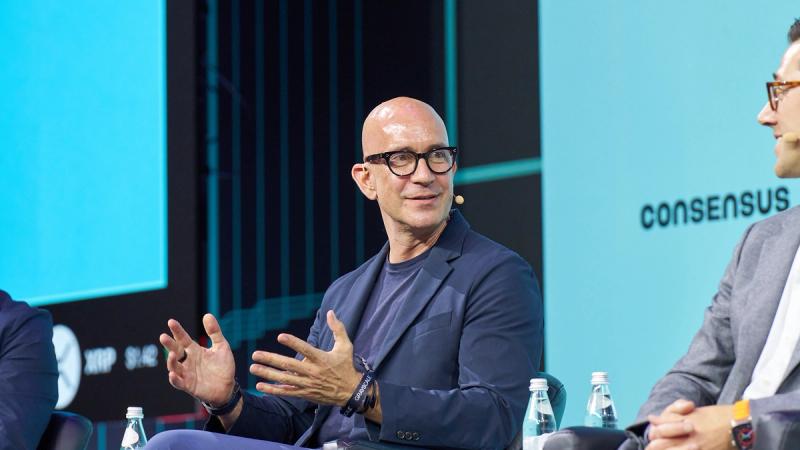
Tokenized shares in the mega-caps will first trade on Securitize's Solana-based platform, with further plans to expand them to NYSE and OKXICE digital venues, the firm said.
Tokenization firm Securitize (SECZ) said it is bringing shares of Apple, Nvidia, Tesla and other major U.S. companies in the Solana (SOL) blockchain, joining a growing race to make traditional stocks available through crypto trading infrastructure.
The new product, called Securitize Stocks, will initially cover 12 companies, including Microsoft, Amazon, Alphabet, Meta, Netflix, Circle, Strategy and Palantir, the firm said Thursday in a press release shared with CoinDesk.
At first, trading of those stock will be available on Securitize's existing Solana-based platform, with Jump Trading providing liquidity and transactions settling in USDC stablecoin.
The stocks are also expected to trade on the New York Stock Exchange's planned 24/7 digital trading platform and the upcoming OKXICE Tokenized Securities Venue, a joint venture between NYSE parent Intercontinental Exchange (ICE) and crypto exchange OKX. Both expansions remain subject to the venues launching and meeting regulatory requirements.
The move comes as Wall Street firms are pushing to bring equities onto blockchain markets, allowing around-the-clock trading, faster settlement and potentially use of stocks as collateral in onchain lending markets.
U.S. regulators are also weighing how to accommodate these products. The Securities and Exchange Commission (SEC) rolled out an “innovation exemption” last month to open a path for new tokenized securities trading venues built on blockchain rails.
Securitize said each of the stock tokens will be backed by an actual share and structured to preserve economic benefits and applicable shareholder rights, including dividends and voting rights. The tokens represent security entitlements rather than direct ownership on a company's shareholder register, though conversion may become available when issuers adopt tokenization.
“The opportunity is to bring equities onchain without leaving behind the ownership, investor protections and market infrastructure that make U.S. capital markets work,” said Carlos Domingo, Chairman and CEO of Securitize. ”Securitize Stocks are designed around that principle, while creating a bridge to a future where issuers themselves can participate directly in tokenization.”
RQD will support the clearing, custody and settlement infrastructure connecting the tokenized shares to traditional securities markets, while Ripple Prime plans to explore institutional uses for the assets.
Eligible investors in the U.S., Europe and other permitted markets will be able to trade Securitize Stock tokens, initially during extended market hours, with plans to expand to 24/7 access.
The OKX-ICE joint venture filed this week to introduce tokenized stock trading under the SEC's framework, another sign of growing interest from established exchanges in blockchain-based securities markets.
“Tokenized equities give investors around the world access to investments they might otherwise never have had the opportunity to participate in, at internet scale,” said Nick Ducoff, general manager of institutional at Solana Foundation.
As stablecoins move into regulated finance, APAC is becoming a key proving ground. This report maps the region’s rules, use cases, and RLUSD’s role.
Asanat Analysis — Why it matters
Securitize's launch of tokenized mega-cap equities on Solana signals maturation in the real-world asset (RWA) sector, moving beyond illiquid private securities into liquid, high-volume trading pairs. Apple, Nvidia, and Tesla represent ~$10T in combined market cap—assets that dwarf most DeFi TVL. The sequencing (Solana first, NYSE second) reveals pragmatic market design: SOL's throughput and cost structure enable price discovery before traditional venue listing, reversing historical fintech adoption curves.
This structurally threatens traditional equity market infrastructure. If tokenized shares achieve deep liquidity on decentralized rails before or parity with legacy exchanges, it redefines settlement, custody, and routing dynamics. Regulatory arbitrage plays a role—Solana's regulatory clarity (vs. Ethereum's ongoing SEC friction) makes it the pragmatic choice despite lower institutional entrenchment. NYSE inclusion signals SEC/FINRA acceptance of the tokenization wrapper itself, not rejection of blockchain settlement.
Watch whether trading volume concentrates on Solana or migrates to NYSE upon listing—this determines whether blockchain RWA is infrastructure innovation (profitable middleware) or disruption (margin compression for traditional brokers). The OKXICE inclusion (OKX's Caribbean venue) suggests multi-rail liquidity design, reducing single-point-of-failure risk that plagued prior tokenization attempts.