Tether: Senator's investigation misses positive work that's led to lower Iran volumes
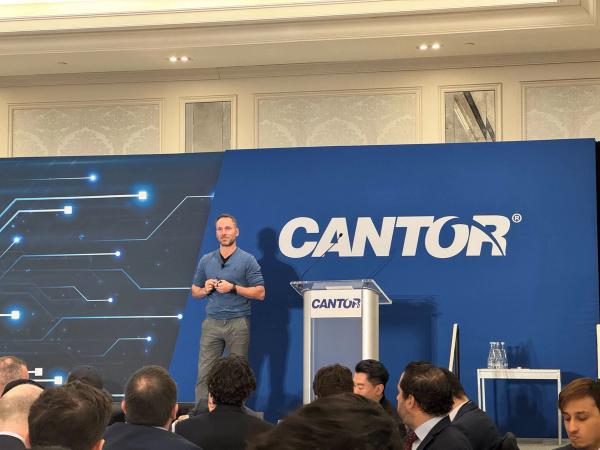
The stablecoin issuer's CEO, Paolo Ardoino, has been defending against accusations that the firm's stablecoins have fueled financial activity in Iran.
Tether is answering back against a report issued last month by Democrats on the Senate Permanent Subcommittee on Investigations that had accused the stablecoin firm of providing "a significant financial lifeline within Iran's shadow banking network," with Tether CEO Paulo Ardoino saying Monday that the probe missed the positive work it's doing to observe sanctions.
Senator Richard Blumenthal, the subcommittee's top Democrat, led the effort, which further highlighted Democratic lawmakers' concerns that crypto is used to support illicit finance. But Ardoino contends that Tether freezes suspicious transactions well before entities such as the U.S. Treasury Department's Office of Foreign Assets Control and Israel's National Bureau for Counter Terror Financing formally flag them.
"Senator Blumenthal's 'analysis' of Tether's sanctions report misses that, since 2023, Tether froze on average 4 weeks prior to OFAC & NBCTF official sanction designation and for 99% of the times Tether froze the reported addresses before Chainalysis labelled them," Ardoino wrote in a post on social media site X.
Ardoino went on to argue that the company's actions "led to Iran-linked stablecoin volumes declining by 94%."
Tether's CEO also spoke remotely at a Washington event, DC Fintech Week, and addressed the senator's report there, as well, last Tuesday. He criticized how it was released to the media before his company could review it.
"I believe it's important for the public also to hear our side of the story," he said.
"Our aim is to push out the bad actors from USDT," Ardoino said. "Those bad actors are moving to other means that are outside of the control of the United States, and now outside of our control."
He added that the work "is not finished," but he said he's happy with Tether's role.
"I wake up in the morning and I look at myself in the mirror, and I know that we're doing the right thing," he said.
The Senate report went back a number of years, focusing in part on the period before 2024 in which it said Tether didn't comprehensively freeze flagged wallets. "This absence of deterrence invited abuse: Terrorist organizations such as Hamas shifted from transacting in bitcoin and a mix of cryptocurrencies to promoting USDT," it said.
Since the report, Blumenthal has additionally been probing the relationship between Tether and its U.S. financial partner, Cantor Fitzgerald, which has close ties to the administration of President Donald Trump. Tether also named Bo Hines, Trump's former White House crypto adviser, as the CEO of its U.S. division last fall.
In recent weeks, the odds that Democrats — including Blumenthal — may return to the majority in the Senate have been climbing, according to prediction market Kalshi. If that happens, Blumenthal could have significantly increased powers to investigate crypto matters.
Diversified RWA stablecoins sustain 5-7% yield from real credit as crypto funding compresses to ~4%. GENIUS pushes yield off-chain; TAM grows to $4B in 3 years.
Asanat Analysis — Why it matters
Tether's defense highlights a structural tension in stablecoin regulation: the same rails enabling remittances and financial inclusion in sanctioned jurisdictions also facilitate compliance violations. Ardoino's claim about 'lower Iran volumes' suggests Tether has implemented monitoring, but the opacity of USDT flows makes verification difficult. Senate scrutiny reflects legitimate concerns about whether stablecoin issuers can effectively gatekeep geopolitical risk while maintaining the permissionless ethos their users expect.
This episode signals how stablecoins remain regulatory flashpoints despite maturation elsewhere in crypto. Unlike decentralized protocols, centralized stablecoin issuers face OFAC-like compliance obligations but lack the infrastructure sophistication of traditional finance to demonstrate it. The investigation's focus on Tether (not, say, Circle or Paxos) reflects USDT's 70%+ market dominance—making it the de facto settlement layer for emerging market and high-risk flows. Future regulation will likely force stablecoin issuers to choose between global reach and jurisdictional compliance, narrowing their utility precisely where demand is highest.