U.S. CFTC rebuffs CME legal stance in consequential fight over perpetual futures
The future of perps in the U.S. may be at stake as the CFTC argues that CME hasn't shown the new policy is hurting it after the agency OK'd its first bitcoin perp.
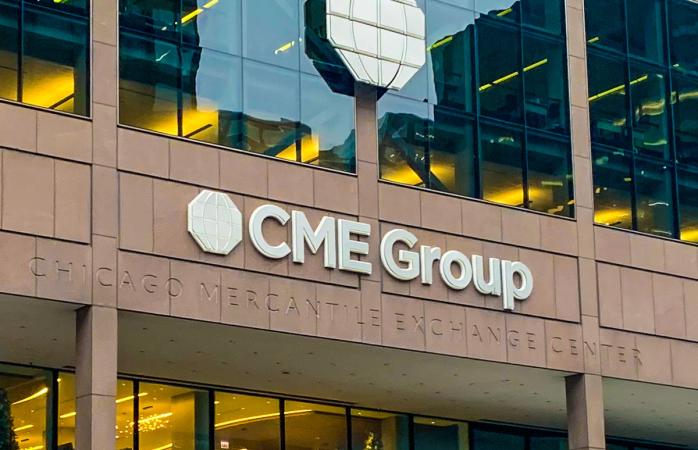
The U.S. Commodity Futures Trading Commission threw open the doors for perpetual futures in the U.S. in May, approving the first bitcoin perp from Kalshi and suggesting that it was open for business on ensuring a domestic surge in such contracts. But the CME Group objected in court, and the CFTC has responded in court that the derivatives giant has no right to get in the way.
"Allegations of increased competition, without any plausible inference of an imminent financial injury," don't give CME the legal standing to challenge the CFTC's actions, the agency said in a brief filed on Friday, noting that volume in crypto futures at the CME has actually risen since its policy shift.
Perp contracts had soared overseas, becoming a major form of transaction in crypto derivatives, and the CFTC's move sought to clarify how the market could get rolling in the U.S. The agency — in response to President Donald Trump's aggressive crypto agenda that included bringing perps into domestic trading — said it'll regulate the products on a case-by-case basis as futures.
Perps allow traders to speculate on the future price of an asset with a typically leveraged position, and the contracts don't come with a built-in expiration.
But CME, which operates the leading global venues for derivatives trading, has insisted the contracts are not futures, because they have no end date. They're really swaps, the company's argument would have it, which would come with an entirely different regulatory approach. Spokespeople for CME didn't immediately respond to a request for comment on the CFTC's latest filing.
The CFTC first asked a federal judge to dismiss CME's case last month, and this latest filing details its argument against the company's legal standing.
"CME must plausibly allege an actual or imminent increase in competition," the CFTC argued. "CME has not even done that."
The agency argued that CME has been telling investors that it hasn't heard of a demand for perps and that they aren't substitutes for the futures it's offering.
"CME cannot have it one way with the court and another way with the investing public on earnings calls," the CFTC contended in its brief.
Jaret Seiberg, a policy analyst at TD Cowen, argued in a Monday client note that CME may still have the edge, in both its standing as a competitor and its argument that perps may be appropriately treated as swaps. However, the clock is ticking on the new market.
"What increasingly concerns us is the growth in perps while the litigation is playing out," Seiberg wrote. "If this growth continues, it could create complications in trying to unwind this market if the CME prevails in the lawsuit."
Diversified RWA stablecoins sustain 5-7% yield from real credit as crypto funding compresses to ~4%. GENIUS pushes yield off-chain; TAM grows to $4B in 3 years.
Asanat Analysis — Why it matters
The CFTC's rejection of CME's legal arguments signals regulatory confidence in its authority to permit perpetual futures under existing frameworks, despite industry pushback. This represents a critical jurisdictional assertion: the agency is asserting that perps can be classified and regulated as derivatives under its purview, not as unregulated instruments. CME's inability to demonstrate material economic harm—a key legal threshold—weakens traditional finance's institutional defense against retail-accessible leverage products in crypto.
This ruling cascades beyond CME and perps themselves. If the CFTC sustains its position through appellate challenges, it establishes precedent for regulated spot and derivatives venues to offer perps domestically, potentially accelerating institutional adoption of leverage infrastructure that offshore platforms have monopolized. Conversely, the decision may trigger Congressional pressure or SEC coordination attempts to reassert control. The outcome determines whether perps remain geofenced to unregulated offshore venues or integrate into the regulated U.S. ecosystem—materially reshaping capital formation dynamics in crypto markets.