Why the Clarity Act Could Decide America’s Financial Future w/ John Deaton
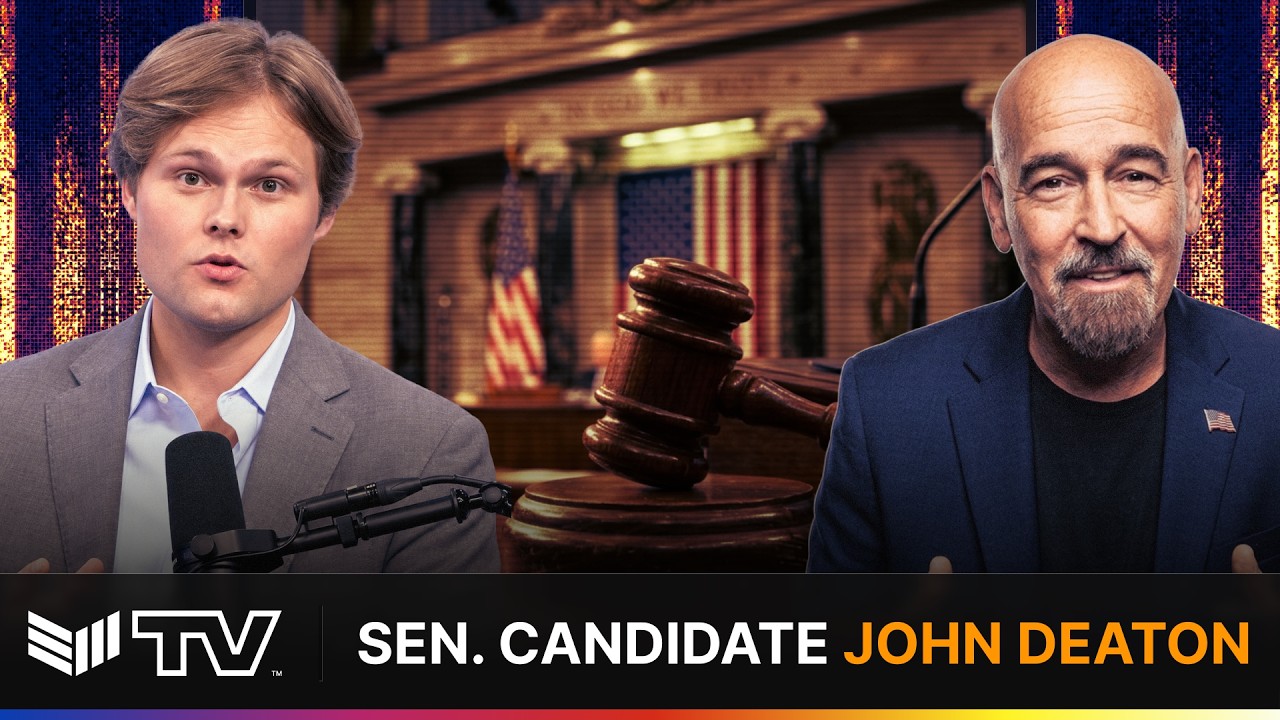
Bitcoin Magazine Why the Clarity Act Could Decide America’s Financial Future w/ John Deaton John Deaton joins Grace Remington and Sean Hagan to break down why the Clarity Act cloture vote is really a...
John Deaton joins Grace Remington and Sean Hagan to break down why the Clarity Act cloture vote is really a vote on whether to even debate the bill.
The Senate is voting today, but not on what most people think. John Deaton joins Grace Remington and Sean Hagan to break down why the Clarity Act cloture vote is really a vote on whether to even debate the bill, and why 53 Republican senators aren’t enough to get there. He explains the math behind needing eight to ten Democrats, where Josh Hawley and Rand Paul stand, and what happens to American digital asset companies if Congress stalls again. Deaton also makes the case that the U.S. is still regulating blockchain with 1930s statutes.
DISCLAIMER: The views and opinions expressed in this show are those of the participants and do not necessarily reflect the official policy or position of BTC Inc., Bitcoin Magazine, or any affiliated entities. This content is provided for informational and educational purposes only and should not be construed as investment, legal, tax, or accounting advice. Nothing contained in this show constitutes a solicitation, recommendation, endorsement, or offer to buy or sell any securities or financial instruments. Viewers should consult their own advisors before making financial or business decisions.
Asanat Analysis — Why it matters
The Clarity Act cloture vote represents a procedural gatekeeping moment rather than a final legislative decision. A successful cloture motion requires 60 votes to advance debate; with only 53 Republican senators, passage depends on securing 7-10 Democratic crossovers. This structural math explains why the bill faces an uncertain path despite bipartisan support in principle. The vote tests whether digital asset regulation has achieved sufficient mainstream legitimacy to warrant floor debate—a prerequisite that even sympathetic lawmakers may withhold if political costs appear high.
The framing that U.S. crypto regulation relies on 1930s-era statutes (Securities Act, Commodity Exchange Act) signals a real gap between current market structure and regulatory architecture. However, this narrative obscures ongoing SEC and CFTC rulemaking that has effectively modernized enforcement without new legislation. The Clarity Act's value lies in codifying jurisdiction boundaries and clarifying stablecoin treatment—deficiencies that current statutes don't adequately address. Failure to advance the bill leaves this ambiguity intact, perpetuating regulatory arbitrage and hindering institutional on-ramp clarity.
Market actors have priced in legislative disappointment multiple times; a failed cloture vote would reinforce existing expectations rather than shock prices. The tangible risk is prolonged uncertainty for U.S. digital asset infrastructure—banks, exchanges, and protocol teams continue operating under conflicting agency guidance. The Clarity Act's defeat doesn't change on-chain activity but signals to global competitors (El Salvador, Singapore, UAE) that regulatory leadership remains contested domestically.