Bitcoin stalls near $83,000 while lighter drops 17% on Robinhood perps plan
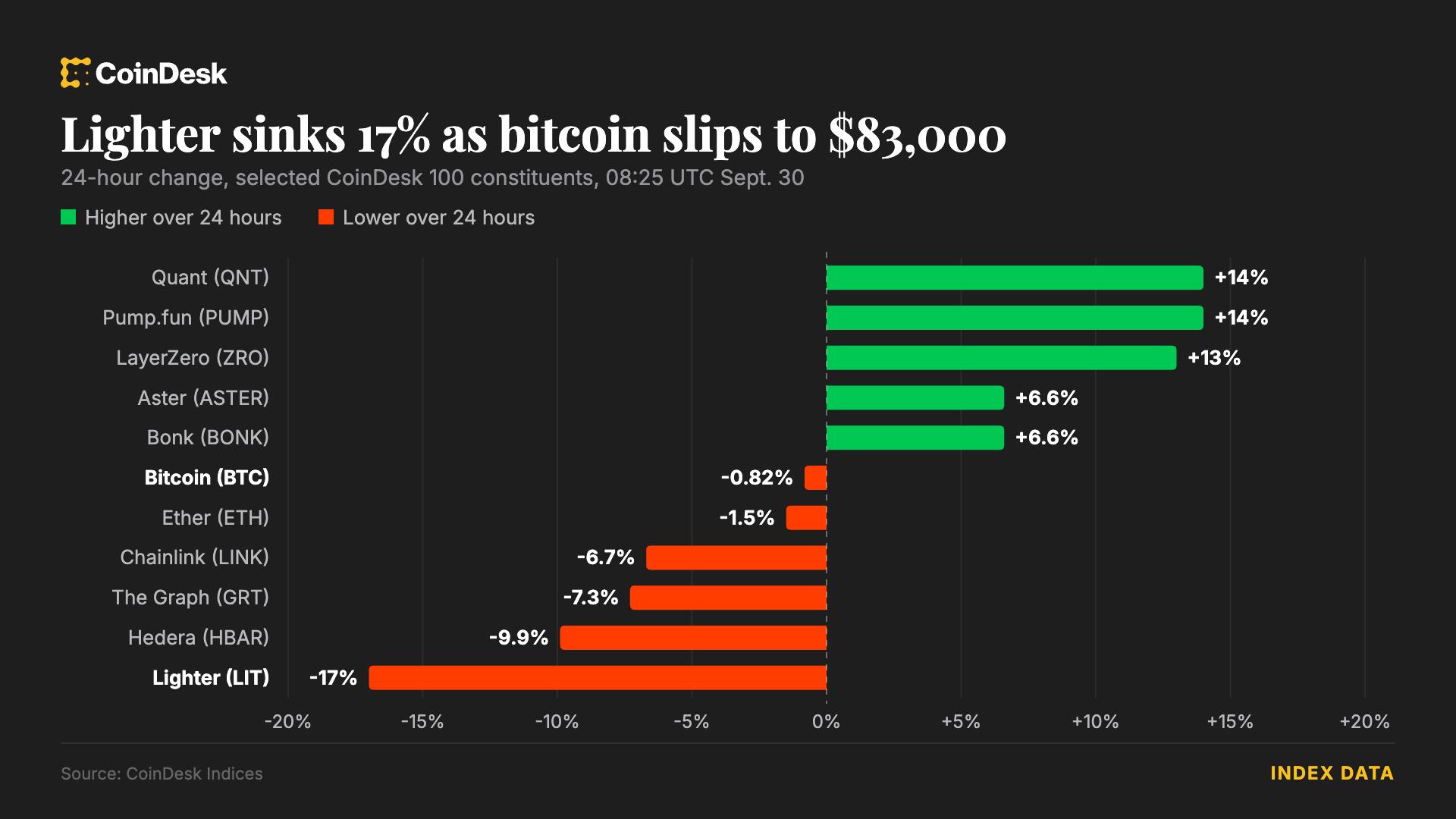
Bitcoin held near $83,000 as the 30-year Treasury yield topped 5.6%, while DeFi tokens reversed and lighter fell after Robinhood unveiled U.S. perps.
Bitcoin BTC$83,831.57 traded at $83,164 in the European morning, down 0.57% since midnight UTC while the rest of the crypto market was mixed, with 50 constituents of the CoinDesk 100 higher and 50 lower.
The 24-hour pictures is weaker as bitcoin lost around 1%, falling from a peak of $84,400 during Tuesday’s U.S. session. The CoinDesk DeFi index (DFX) fell 2.3%, the worst performance in the index family, as aave AAVE$161.53 retreated 4.4% after leading Tuesday's gains with an 11% jump.
Traditional markets were firmer, with S&P 500 futures up 0.27% and the Stoxx 600 up 0.74% in morning trade. That came even after the 30-year Treasury yield crossed 5.6% on Tuesday, its highest since June 2002, and the 10-year reached a fresh 2007 high near 5.3%, according to CNBC. Brent crude traded at $96.43 after falling on Tuesday, well below the $100 level that accompanied Monday's crypto selloff.
No obvious catalyst is behind the morning's drift. Attention is turning to the U.S. personal consumption expenditures (PCE) price index, the Fed's preferred inflation gauge, due before the Wall Street open, with Micron earnings after the close. Bitcoin has now been in a consolidation pattern since Sept. 21’s failed breakout attempt at $87,300.
Diversified RWA stablecoins sustain 5-7% yield from real credit as crypto funding compresses to ~4%. GENIUS pushes yield off-chain; TAM grows to $4B in 3 years.
Asanat Analysis — Why it matters
Bitcoin's consolidation near $83K amid a 5.6% Treasury yield spike signals traders are reassessing carry-trade dynamics. Higher real rates typically pressure risk assets, yet BTC's stability suggests institutional accumulation at this level. The concurrent DeFi token weakness indicates rotation from yield-dependent protocols toward macro hedges—a pattern seen during previous Fed tightening cycles.
Lighter's 17% drop on Robinhood's perpetuals launch reveals market structure risk. Retail-accessible leverage products historically compress spreads and increase liquidation cascades during volatility. The token's decline suggests market participants are pricing in either competitive pressure on Lighter's trading fees or reduced demand for its native incentives in a more crowded perps ecosystem. This mirrors the 2021-2022 pattern where new exchange entries triggered token underperformance as liquidity fragmented.