Jordi Visser: Why AI Agents Make the BTC Bull Case
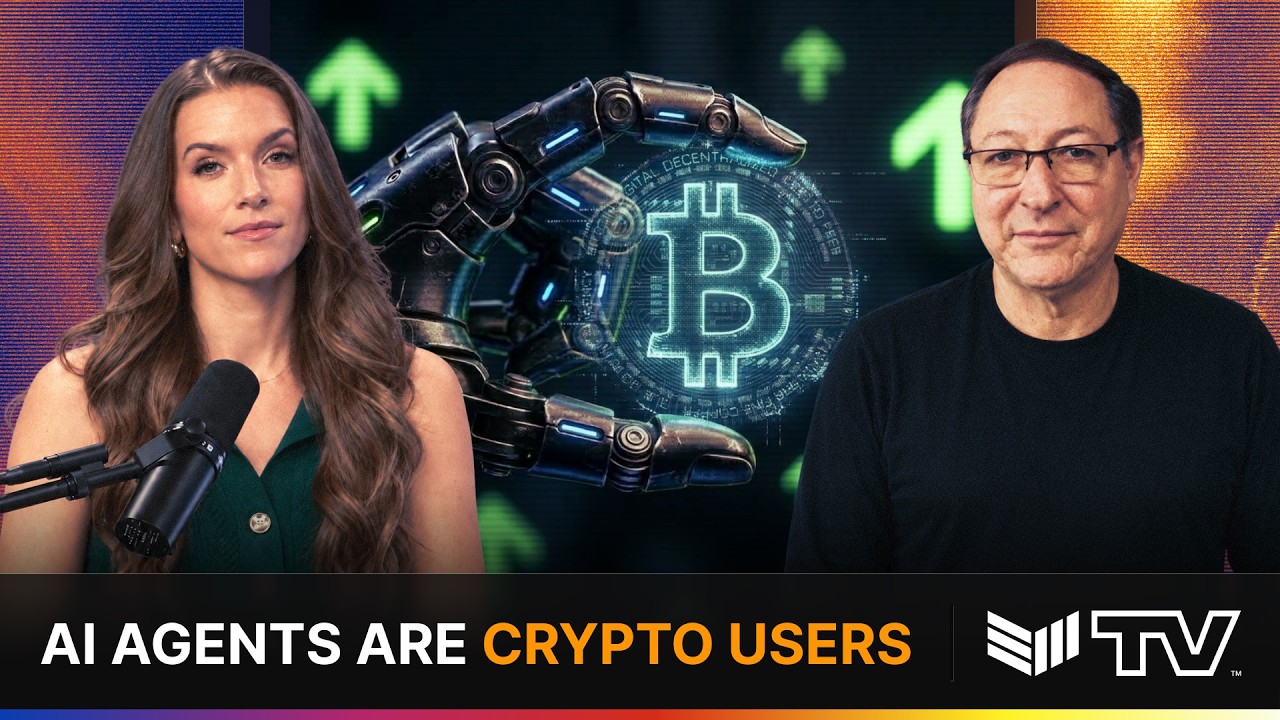
Bitcoin Magazine Jordi Visser: Why AI Agents Make the BTC Bull Case After 15 years of building crypto rails, Jordi Visser makes a bold claim: stablecoins, lending, and tokenization were built for AI...
After 15 years of building crypto rails, Jordi Visser makes a bold claim: stablecoins, lending, and tokenization were built for AI agents, not humans.
Crypto spent 15 years building rails — lending, tokenization, stablecoins — and Jordi Visser argues the users it was built for were never meant to be human. In this conversation with Grace Remington and Sean Hagan, Visser lays out his Ghost Rails thesis, comparing today’s moment to the 14-year gap between Netscape going public and the App Store finally putting the internet in everyone’s hands. He explains why AI agents, not retail wallets, are the inflection point for the agentic economy, and why that’s “extremely positive” for Bitcoin specifically. If you’ve wondered what actually breaks the liquidity-driven narrative around this asset class, start here.
Chapters:00:00 — Betting on nominal growth: can AI outrun the U.S. debt load?02:06 — Why Bitcoin is the only asset surviving 20 years04:01 — Crypto built the plumbing, AI agents became the users07:33 — Tokenization turns $900 trillion of illiquid assets into money09:50 — What has to break before the top 10% finally buy Bitcoin12:18 — The Santa Claus effect and why belief beats innovation14:23 — Swarms working 24/7 and the exponential investors ignore16:47 — Debt-financed data centers, cancer breakthroughs, and the bond market scare19:19 — The AI doomsday soap opera23:09 — Bitcoin demand for 30 years and the case for good deflation
DISCLAIMER: The views and opinions expressed in this show are those of the participants and do not necessarily reflect the official policy or position of BTC Inc., Bitcoin Magazine, or any affiliated entities. This content is provided for informational and educational purposes only and should not be construed as investment, legal, tax, or accounting advice. Nothing contained in this show constitutes a solicitation, recommendation, endorsement, or offer to buy or sell any securities or financial instruments. Viewers should consult their own advisors before making financial or business decisions.
Asanat Analysis — Why it matters
Visser's framing—that crypto infrastructure was inadvertently architected for AI agent economics—reflects a meaningful shift in how technologists are rationalizing Bitcoin's utility beyond store-of-value narratives. Rather than arguing AI drives demand for BTC itself, the argument suggests stablecoins, programmable settlement, and tokenized assets become essential plumbing when autonomous agents execute financial transactions at machine speed and scale. This recasts 15 years of blockchain development as foundational layer for the AI era, not backward-looking speculation.
The claim warrants scrutiny: stablecoins and lending protocols were primarily designed for human-speed DeFi and remittance rails. Whether they're actually optimal for agent-to-agent settlement—or whether purpose-built protocols will supplant them—remains unproven. More importantly, this narrative doesn't mechanically create BTC demand unless agents preferentially denominate value or collateral in Bitcoin, which remains an open question. The argument signals how macro technologists are repositioning crypto's relevance as AI labor and resource allocation becomes economically significant, but conflates crypto infrastructure utility with Bitcoin appreciation.