Kraken’s parent Payward is betting billions on becoming financial infrastructure, not just a crypto exchange
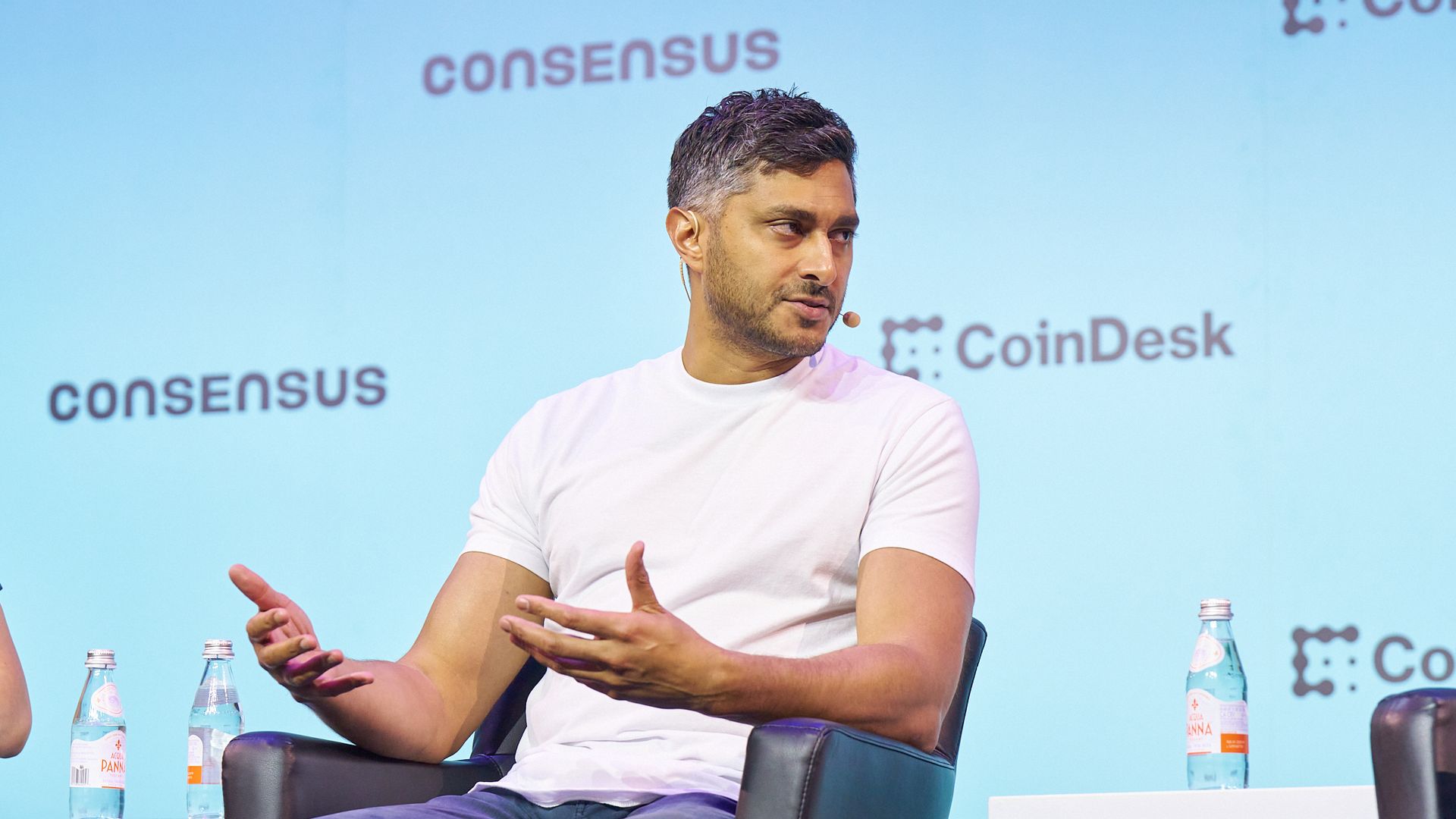
Kraken parent Payward is unifying trading, payments, asset management and institutional services on common rails, co-CEO Arjun Sethi said.
Kraken spent most of its 15 years building a crypto exchange. Over the past two years, its parent company has been buying and building the pieces of something much bigger.
Payward, its Wyoming-based parent company, spent billions on acquisitions that expanded its reach into futures and derivatives, pushed into tokenized stocks, and pursued additional banking capabilities in the U.S. and Europe.
The moves are part of a bigger goal to turn Payward into a unified financial platform where trading, banking, asset management and services for other businesses can operate under the same infrastructure.
“We’re not a holding company,” he said. “It’s one platform, one balance sheet, one regulatory stack,” its co-CEO Arjun Sethi told CoinDesk in an interview.
At the center of the strategy is what Sethi calls “one ledger,” which allows money and assets to move between products without the patchwork of intermediaries that sits behind most of traditional finance.
Payward is not alone in pursuing a broader financial platform. Coinbase is building an “Everything Exchange” spanning crypto, stocks, derivatives and prediction markets, while Binance is combining trading, payments, investing and yield products into a single platform.
But Payward is pursuing a different model than Coinbase, according to Architect Partners, a digital-assets investment bank. Rather than concentrating all of its products inside a single Kraken-branded platform, the company is building infrastructure that can support multiple brands and be used by outside financial companies.
“Payward appears to be choosing a different aggregation layer: the regulated infrastructure stack that can power financial products across multiple brands, customer segments, and partner channels,” Architect Partners said.
“In our view, Payward is helping define the next evolution beyond the ‘Everything Exchange’: an ‘Everything Financial Infrastructure’ model.”
Kraken remains smaller by exchange volume: CoinGecko data show it averaged about $1.1 billion in daily spot trading during the first four months of 2026, while Binance controlled 38.7% of top-10 centralized-exchange spot volume in the second quarter and Coinbase reported an 8.6% share of overall crypto trading volume in the first quarter.
Payward’s thesis is that much of the legacy financial system remains constrained by decades-old technology and market conventions. Securities take time to settle, markets close overnight and on weekends and banks, brokers, custodians and clearing houses maintain separate records that must be reconciled.
Each boundary creates another intermediary, delay and fee, Sethi said. Blockchain systems, in his view, offer an alternative by allowing assets to function as investments, collateral and programmable instruments on shared infrastructure.
Payward has divided that vision into four pillars: trading through Kraken, banking, asset management and Payward Services, its business-to-business infrastructure division.
Kraken has about 6.6 million funded accounts holding between $40 billion and $50 billion of assets, according to Sethi, across more than 190 countries and territories.
To grow its vision of a unified financial platform, Payward is now adding services around those accounts, including cards, lending, derivatives and tokenized equities, as well as products that allow customers to borrow against assets or deploy them in decentralized-finance applications. Kraken Financial, its Wyoming-chartered special-purpose depository institution, also forms part of the stack.
While Payward builds some capabilities internally, it also acquires others that would take years to replicate and partners with institutions whose position cannot simply be bought.
Payward paid $1.5 billion for the acquisition of NinjaTrader to build a U.S. futures brokerage, including its technology and regulatory permissions, which would have been costly and time-consuming, Sethi said. It followed that with a $550 million deal for Bitnomial, adding regulated derivatives infrastructure, including an exchange, clearinghouse and futures brokerage.
The firm is also “about to buy a bank in Europe,” Sethi said, without disclosing who the target was. Bloomberg reported in July that Payward was planning to buy a Lithuanian bank as part of its strategy to expand on the continent.
The company does not maintain a shopping list or broadly solicit pitches from bankers. Instead, it uses a quantitative framework to determine whether a target fills an infrastructure gap and provides capabilities customers want, Sethi said.
However, not every piece of the financial system can be bought. Some of Payward's most consequential recent moves have involved partnering with the incumbent institutions that blockchain technology was once supposed to displace.
Nasdaq, for example, agreed this month to invest $100 million in Payward while expanding its work on Nasdaq Equity Tokens and market surveillance technology. The companies expect to launch the tokens in the second quarter of 2027, with Payward providing distribution, trading and post-trade infrastructure.
Meanwhile, the London Stock Exchange has separately partnered with Payward to explore tokenized public equities. Subject to regulatory approval, it plans to list xStocks, tokenized representations of publicly traded shares, on its forthcoming LSE 24 venue in 2027.
For Payward, those relationships reflect an acknowledgment that blockchain infrastructure doesn't eliminate everything established exchanges have spent decades building.
“Trust is their currency,” Sethi said, arguing that Payward can complement rather than displace established exchanges’ listing and regulatory infrastructure.
Asanat Analysis — Why it matters
Payward's infrastructure consolidation signals a structural shift in how legacy crypto businesses compete post-regulation. By bundling exchange, custody, payments and institutional services on unified rails rather than as bolted-on verticals, the firm is copying playbooks from traditional financial conglomerates—Fidelity, BlackRock—that extracted margins from custody and settlement layers. This matters because it suggests the exchange-as-storefront model faces compression; the real value accrual moves to infrastructure operators who can arbitrage spreads across asset classes and client types.
The timing reflects maturing institutional demand. Kraken's primary exchange function now likely generates lower incremental returns as spot trading commoditizes and fees compress. Repackaging existing services as a unified platform is a conventional diversification play, but in crypto it signals that profitability increasingly depends on lock-in effects—custody, staking, institutional prime brokerage—rather than volume. This also hints at Payward's confidence in a stable regulatory regime; a billion-dollar infrastructure bet requires multi-year visibility that was absent 18-24 months ago.