Proposed WINK Fund Would Bring Zcash ETF Exposure to Brokerage Accounts
Winklevoss Asset Services has filed a Form S-1 registration statement with the US Securities and Exchange Commission for a proposed spot Zcash ETF that would hold ZEC directly and seek a Nasdaq listing under the ticker WINK.
The fund’s proposed annual sponsor fee is 0.25%, and its brokerage-based structure could give investors Zcash exposure without requiring them to buy or hold the cryptocurrency themselves.
The filing is not SEC approval, and it does not confirm that WINK has launched or begun trading. No trading date is confirmed, so the proposed ticker and listing should not be mistaken for an available investment.
The Winklevoss Zcash ETF will work with @cypherpunk on all Zcash ecosystem matters. 🤝 https://t.co/7nOrHFMRhq
Winklevoss Asset Services would sponsor the fund, while Gemini Trust Company, identified in the filing coverage as a Winklevoss affiliate, would custody its ZEC holdings. The ETF would hold the cryptocurrency directly and would not use leverage or derivatives to pursue its investment objective.
That structure is intended to track Zcash’s price through a traditional brokerage account. Investors would not need to set up a crypto wallet or manage ZEC themselves, although fund shares would still be tied to the price of the underlying cryptocurrency.
Winklevoss Capital Fund, through one or more affiliates, has indicated interest in buying up to $100 million in shares. That indication is nonbinding: it is not a commitment to invest, and it does not guarantee demand for the fund if it eventually becomes available.
The proposed 0.25% annual sponsor fee is a recurring fund cost, not a one-time trading charge. A brokerage-based product can simplify access, but it does not remove the price risks associated with ZEC or guarantee that an ETF’s share price will match the value of its holdings at every moment.
Zcash uses zero-knowledge proofs to enable shielded transactions. In plain terms, this cryptographic method can let the network verify a transaction while concealing its amount and the identities of the sender and recipient. That feature is central to Zcash’s privacy design; it does not mean every ZEC transaction is shielded.
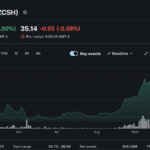
WINK would enter a US market where Grayscale’s Zcash ETF, trading under the ticker ZCSH, is already available, according to the October 6 report. Grayscale recently announced a 3-for-1 share split for ZCSH. The products are separate funds, and the existence of a trading Zcash ETF does not establish that WINK has cleared its own registration process.
CoinGecko data cited in the report put ZEC at roughly $1,354 on Tuesday, October 6, 2026, with a market capitalization of about $23 billion. The same data showed a gain of more than 735% over the preceding year. Those are a dated snapshot, not a current quote or a forecast.
WINK’s key milestone isn’t the proposed Nasdaq ticker; it’s whether the registration process progresses and the fund becomes eligible to trade. Until then, investors have a filing describing a proposed product-not a launched Zcash ETF. The distinction between an ETF filing and actual trading matters for any crypto fund: a planned brokerage route is not yet an available one.
Follow 99Bitcoins on X For the Latest Market Updates and Subscribe on YouTube For Daily Expert Market Analysis.
Established in 2013, 99Bitcoin’s team members have been crypto experts since Bitcoin’s Early days.
Alex is a seasoned cryptocurrency trader and market analyst with over seven years of active experience in the digital asset space. Since entering the markets in 2017, Alex has specialized in identifying emerging "meta" trends and high-volatility narratives. Notably, Alex... Read More
Asanat Analysis — Why it matters
A Winklevoss-backed spot Zcash ETF filing signals institutional infrastructure expansion for privacy coins, a category that has remained largely inaccessible via traditional brokerage accounts. Unlike Bitcoin and Ethereum—which gained spot ETF approval in the US in 2021 and 2023 respectively—privacy-focused assets face regulatory friction due to sanctions and AML concerns. This filing tests whether the SEC views ZEC differently post-enforcement clarity, particularly after FinCEN's 2023 guidance distinguishing privacy tech from prohibition.
The Zcash ecosystem has positioned itself as compliant through optional transaction shielding and regulatory engagement; approval would validate that positioning and likely catalyze similar applications for Monero or other privacy assets. Rejection or delayed approval would conversely signal regulatory hardening on privacy coins regardless of compliance efforts. The filing's timing—amid broader institutional crypto adoption—reflects confidence in the post-FIT21 regulatory environment, though passage remains uncertain given Congressional scrutiny of privacy technology.
For Zcash holders and the protocol, approval reduces friction in institutional acquisition (no self-custody or exchange risk) but also triggers price volatility around regulatory decision points. Success here becomes a precedent lever for the wider privacy-coin sector.