There were many conductors in the derailment of the crypto industry's Clarity Act
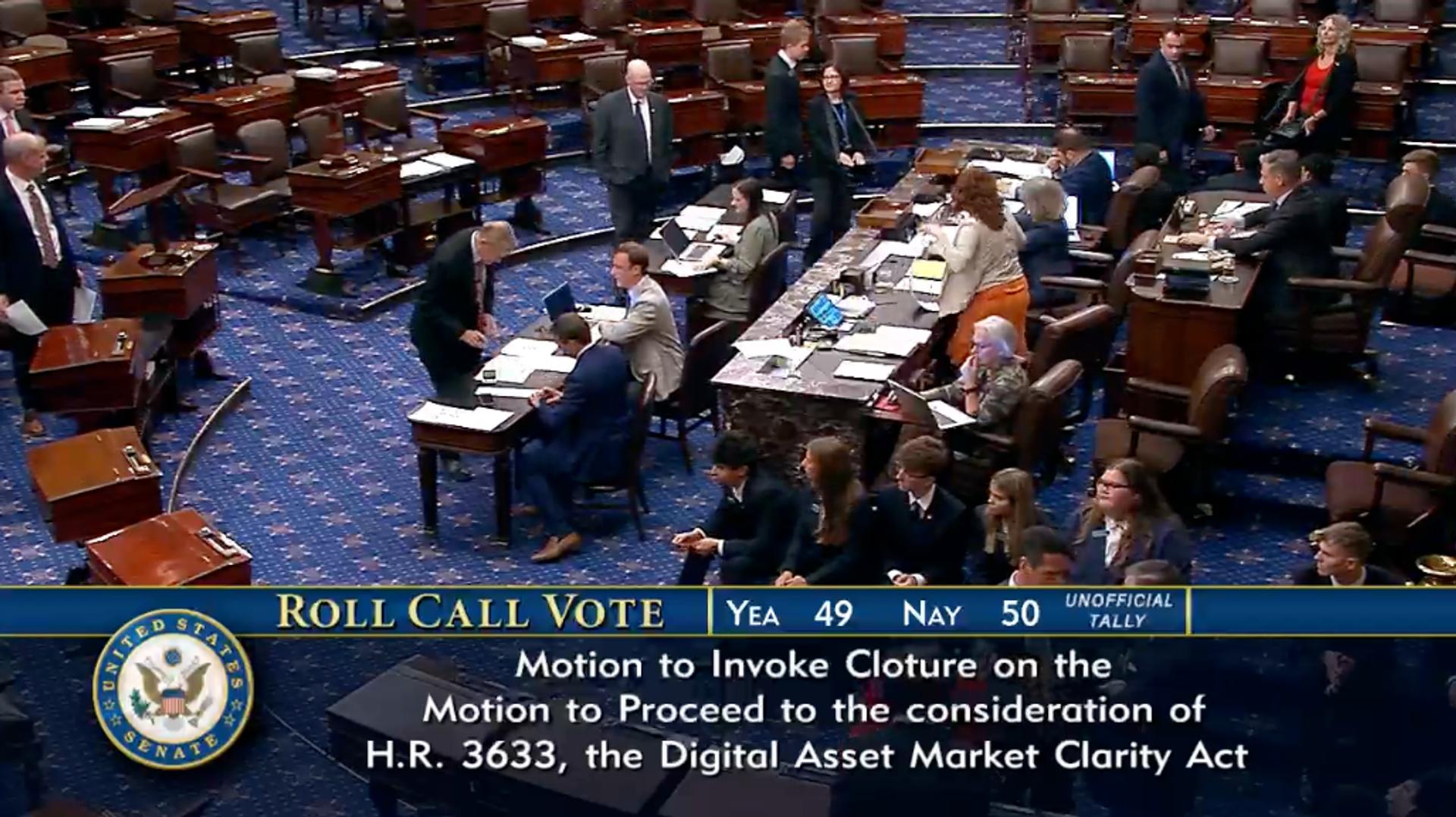
Last minute, behind-the-scenes disputes locked in a dismal showing for the market structure legislation the industry pinned its greatest hopes on.
Senator Cynthia Lummis' disappointment was already palpable the day before the U.S. Senate shot down the Digital Asset Market Clarity Act. She stood on a stage at a crypto event in Washington and talked about how she'd worked on the bill for more than five years — the bulk of her career as a senator.
Lummis, who is retiring soon, knew by then that things were going badly. She and other Republicans had made what they characterized as their final offer, which they argued carried more concessions to Democrats, including another agreement from President Donald Trump to accept unprecedented ethics constraints on his crypto holdings. But Democrats were already rebuffing it and coming out with more demands.
From the other side, the Democrats saw legislation that they argued was substantially similar to what was already on the table and still let Trump evade real responsibility for conflicts of interest in controlling a crypto empire while also steering its oversight. That didn't really have much to do with the actual crypto market structure policies at the heart of the bill, but it's the issue they circled their wagons around.
"The president should not be able to use the power and influence of his office to benefit his own crypto holdings while his administration makes decisions that could directly affect their value," said Senator Mark Warner, one of the Democrats who worked on the illicit-finance portions of the bill and said he really wanted to vote yes on it. "At a minimum, any serious crypto legislation must include meaningful ethics requirements that prevent the president and other senior government officials from profiting off the policies they oversee."
But the Democrats said they were making an effort to continue talks down to the wire, and they were rebuffed by Republicans who shut down the negotiation and proceeded with the vote. (The vote didn't have to happen on Tuesday afternoon, and it could have been shifted by Republican leaders if there were still a chance for negotiations.)
"Just as Democrats and Republicans were making progress to address ethics concerns, Republican leadership ended talks and forced a vote," said Democrat Senator Ruben Gallego in a statement after the Tuesday vote. "They were never serious about bipartisan negotiations."
“As you may have heard, there was a bipartisan deal on the table as recently as this afternoon to resolve all outstanding items including ethics," Schumer said. “Republican leadership walked into the room, broke up the bipartisan discussion and said, 'No, we’re done' and killed it."
So the Democrats — even those like Senator Kirsten Gillibrand that had pushed for the crypto bill since its beginnings — jumped ship, leaving a meager showing of 49 votes in support. That's 11 less than the 60 to clear the minimum hurdle for advancing the bill.
For her part, Lummis argued that the counter offer she saw from Democrats on Monday was essentially the same position they'd taken before the Senate left on its August recess.
And in a statement after the vote, she blamed the Democrats, calling them "anti-American" (despite the fact that a handful of the no votes came from her fellow Republicans).
"This afternoon, Senate Democrats proved they were never truly serious about protecting consumers and preserving American leadership," she said. "I sat at the table with Senate Democrats working in good faith to get this done while they played games."
All along, the Clarity Act had been beset by missed chances and high-pressure deadlines. When an earlier version of the bill was about to clear an important milestone in the Senate Banking Committee, Coinbase CEO Brian Armstrong walked away from the bill in opposition of its treatment of stablecoin rewards programs. Coinbase's opposition helped halt the bill's momentum and led to weeks of delay before it could get the committee approval.
When the legislative talks picked up pace again, it was already late in the congressional session, with lobbyists and lawmakers well aware that the election was looming that would make it harder to secure bipartisan legislative work. All along, the ethics question stood as the center of debate and the aspect that needed to be ironed out if the rest were to proceed.
In that process, President Trump agreed to concessions twice, including a second batch of changes over the weekend. But judging from the sentiments from Gallego, one of the chief Democratic negotiators on this point, it wasn't nearly enough.
"All President Trump wants is for the Senate to give him time to crime, and I won’t support any piece of legislation that enables him," the Arizona senator said.
During the negotiations, Gallego and other Democrats had to turn their backs on Senator Elizabeth Warren, the senior Democrat on the Senate Banking Committee, who favored strong opposition to Clarity. She kept up that view, continually underlining the crypto ties between Trump and the crypto industry from which he earned more than a billion dollars during the first year of his second term.
"I believe we can get crypto legislation that both Republicans and Democrats can agree on. But not this bill," she said on the Senate floor on Tuesday. "This bill will turbocharge Donald Trump’s unprecedented corruption."
Apart from the ethics debate, the most pernicious point of contention was whether the bill would halt stablecoin rewards that resemble (and could compete with) bank deposit accounts. That was a factor that drew Republican opposition, such as the no from Senator Josh Hawkley of Missouri, who said last month that he opposed the bill.
This week's failure doesn't limit lawmakers from trying a much more difficult and long-odds effort in what's known as the "lame duck" session of Congress, about four weeks between the election and the winter holidays. Republican Senator John Kennedy told journalist Eleanor Terrett that it could come back in that period.
Overall, the industry's legislative scorecard for this congressional session was far and away stronger than it ever had been. It got the hugely significant stablecoin issuer bill into law last year, the Guiding and Establishing National Innovation for U.S. Stablecoins (GENIUS) Act, which drew a huge bipartisan vote. The Clarity Act made a good showing when it cleared the House of Representatives, and it reached a Senate vote — unprecedented progress for market structure legislation.
And the House, where market structure momentum has always been strongest, isn't throwing in the towel after the Senate's failure. The two chairmen of the House Agriculture Committee and the House Financial Services Committee issued a joint statement on Tuesday that said they're still supporting action in Congress, but that they'll help out at the regulator level in the meantime.
"The House has worked across multiple Congresses to establish a functional digital asset market structure framework for the digital asset ecosystem," they said. "Until statutory certainty is achieved, we look forward to partnering with the federal financial regulators as they utilize existing authorities to develop rules and issue guidance governing digital assets."
Meanwhile, the Democrats who voted no will blaze into the final weeks of the midterm election season criticizing the crypto dealings of the president, and the Republicans will accuse Democrats of destroying U.S. innovation (while hoping that the crypto industry’s campaign funds spend millions opposing their political foes).
Tokenized equities lead RWA inflows as the market recovers; Binance's bStocks hit ~$118.5M in two months, now #2 issuer and ~90% of on-chain equity DEX volume.