Bitcoin slides to $83,300 as bond yields hit highest level since 2007
The 10-year Treasury yield reached its highest since 2007, sending U.S. stocks and crypto lower before Asian and European traders bought the dip.
Bitcoin BTC$83,229.78 has given back gains from an early Thursday recovery, now trading at $83,344, down 1.23% since midnight UTC, with a bond selloff that pushed the U.S. 10-year Treasury yield to its highest since 2007 weighing on crypto for a second day.
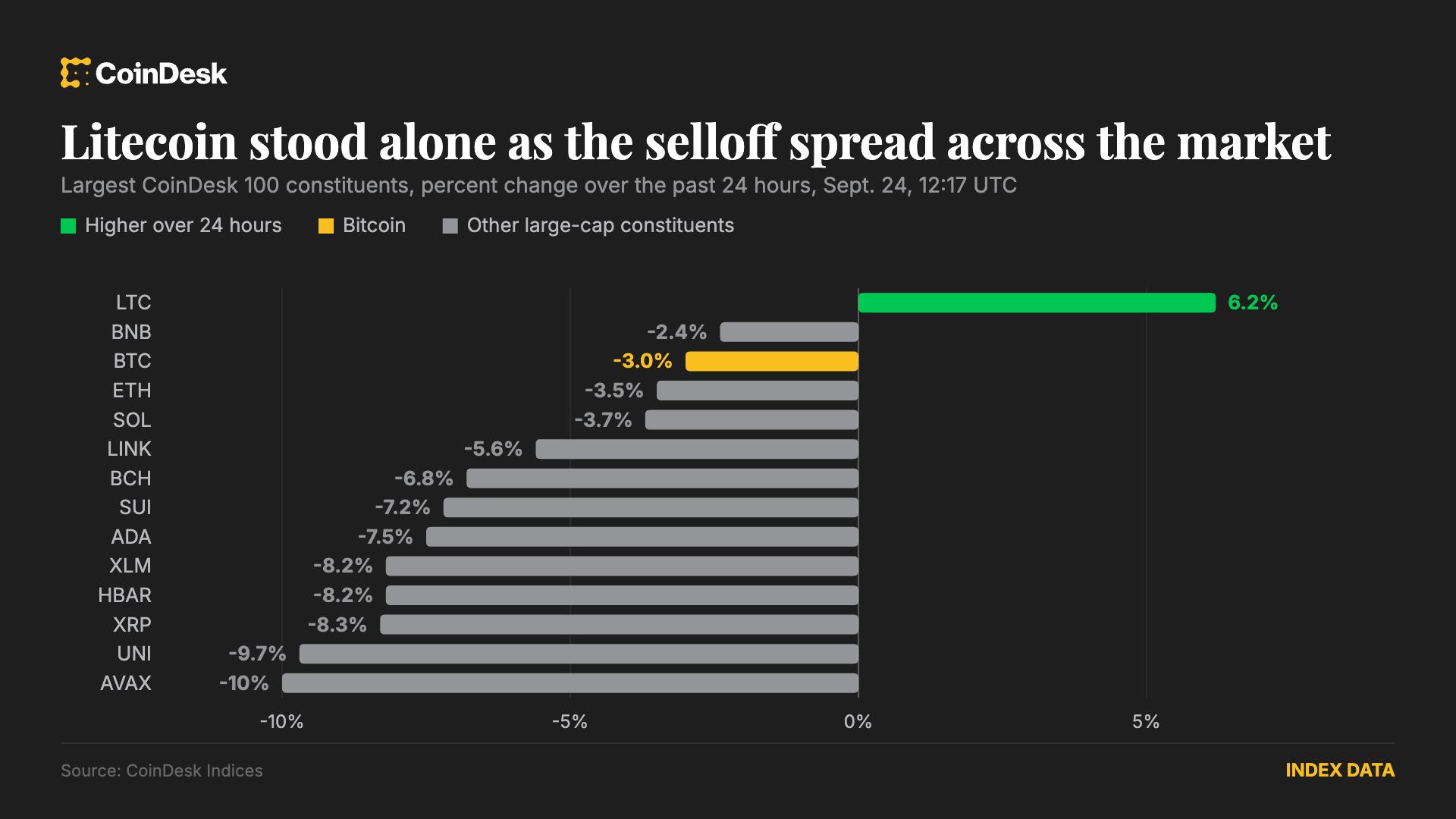
The move has taken the whole market with it, ether ETH$2,635.65 is down 1.55%, XRP lost 2.87% while solana (SOL) is trading at $113.14 having lost 1.61%. While the smaller tokens led a slight recovery in the European morning, they are now suffering the hardest, with NEAR and HYPE down by 3.32% and 3.94% respectively.
The dollar index (DXY) added 0.13% to 101.24 - its highest level since July, while gold is down by 0.71% to $4,257 and U.S. equity futures trend lower again. S&P 500 futures lost 0.61% while Nasdaq 100 tumbled by more than 1%.
As stablecoins move into regulated finance, APAC is becoming a key proving ground. This report maps the region’s rules, use cases, and RLUSD’s role.
Asanat Analysis — Why it matters
Bitcoin's slide to $83,300 correlates with 10-year Treasury yields hitting 2007 highs, signaling a structural shift in macro conditions rather than crypto-specific weakness. Rising real rates typically compress risk asset valuations across equities and digital assets simultaneously. The 2007 yield level is particularly notable—it suggests either inflation expectations have recalibrated sharply upward or Fed policy trajectory has shifted materially, both of which affect crypto's opportunity cost relative to risk-free instruments.
The intraday dip-buying by Asian and European traders indicates retail and institutional conviction remains intact despite macro headwinds, a pattern seen during previous yield shocks in 2021-2022. However, sustained elevated yields would pressure crypto's narrative as a non-correlated hedge; if bonds offer 5%+ real yields, the urgency to hold non-yielding assets diminishes. Monitor whether this becomes a floor-test or a warning sign of deeper capitulation if yields continue higher—the macro regime change matters more than the spot price move itself.