Traders price in 4 Fed rate hikes by June 2027 as bitcoin slides below $83,000
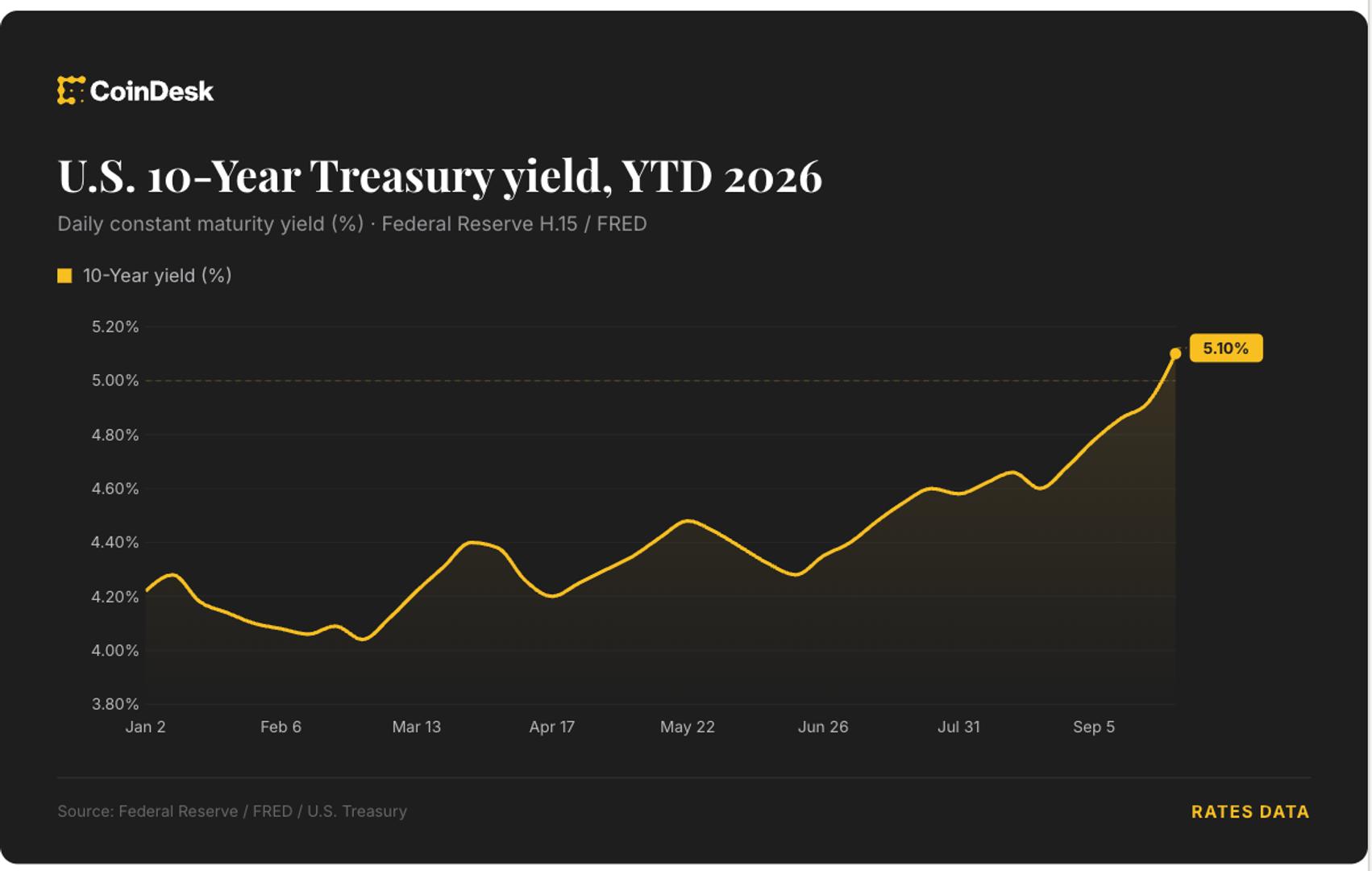
The four-hike path is the most likely outcome, while rising bond yields and a stronger dollar weigh on bitcoin and gold.
U.S. Treasury yields across the entire curve are pushing to new highs as traders prepare for a longer stretch of tighter monetary policy. CME FedWatch puts the 4.75% to 5% federal funds range as the likely outcome for June 2027.
That would mean four quarter-point hikes from today’s 3.75% to 4% range. Meanwhile, the Federal Reserve has already raised the fed funds rate by 25 bps this month.
The pressure is across the entire Treasury market. The 20-year yield is approaching 5.5%, which has sent the long-bond ETF (TLT), to all-time lows below $80. While the 10-year yield is above 5.1%, levels last seen in 2007. Borrowing costs are rising beyond the U.S. too, with government bond yields under pressure in France, Germany, the U.K. and Japan.
Higher yields and a stronger dollar are weighing on risk assets. The dollar index has climbed above 101, up 3% this year. While, bitcoin has fallen below $83,000, from its local high of $87,500 and gold remains just above $4,200, down 25% from its January all-time high.
Several factors are pushing U.S. Treasury yields higher. The economy remains strong: the S&P Global composite PMI, which covers manufacturing and services, exceeded expectations in September, rising almost 4.3% to 58.4.
Middle East tensions have also made the inflation outlook less certain, which has contributed to oil and diesel prices rising.
While heavy borrowing to fund AI infrastructure is adding to the supply of bonds competing with Treasuries for investors. Together, stronger growth, inflation risk and greater demand for capital are putting upward pressure on yields.
The Japanese yen continues to weaken against the U.S. dollar which is now back at 159 yen. That reverses much of the currency’s recovery from around 153 following the reported U.S. and Japanese intervention last month.
The question is whether the prospect of further Fed hikes will keep lifting yields and the dollar.
As stablecoins move into regulated finance, APAC is becoming a key proving ground. This report maps the region’s rules, use cases, and RLUSD’s role.
Asanat Analysis — Why it matters
The repricing of Fed expectations toward four hikes by mid-2027 signals a shift in market-implied inflation or growth concerns. This tightening cycle creates headwinds for risk assets via two channels: higher real rates reduce the opportunity cost of non-yielding assets like bitcoin, while a stronger dollar makes dollar-denominated crypto less attractive to international buyers. The consensus around 'most likely' reflects reduced uncertainty, which typically favors defensive positioning over speculative accumulation.
Bitcoin's slide below $83k in this environment is not isolated—it mirrors concurrent weakness in gold and growth equities, positioning crypto as correlated to macro risk-off flows rather than as an inflation hedge. Historically, BTC has shown mixed performance during hiking cycles (2015-2018 saw volatility despite eventual rallies). The timing matters: if rate-hike expectations stabilize here, further downside may be limited; if data surprises higher, the Fed path could extend, pressuring prices further. The key watch is whether traders begin pricing in cuts before mid-2027, which would reverse the current headwind.