Dogecoin down 8%, bitcoin under $84,000 as Treasury yields hit highest level since 2007
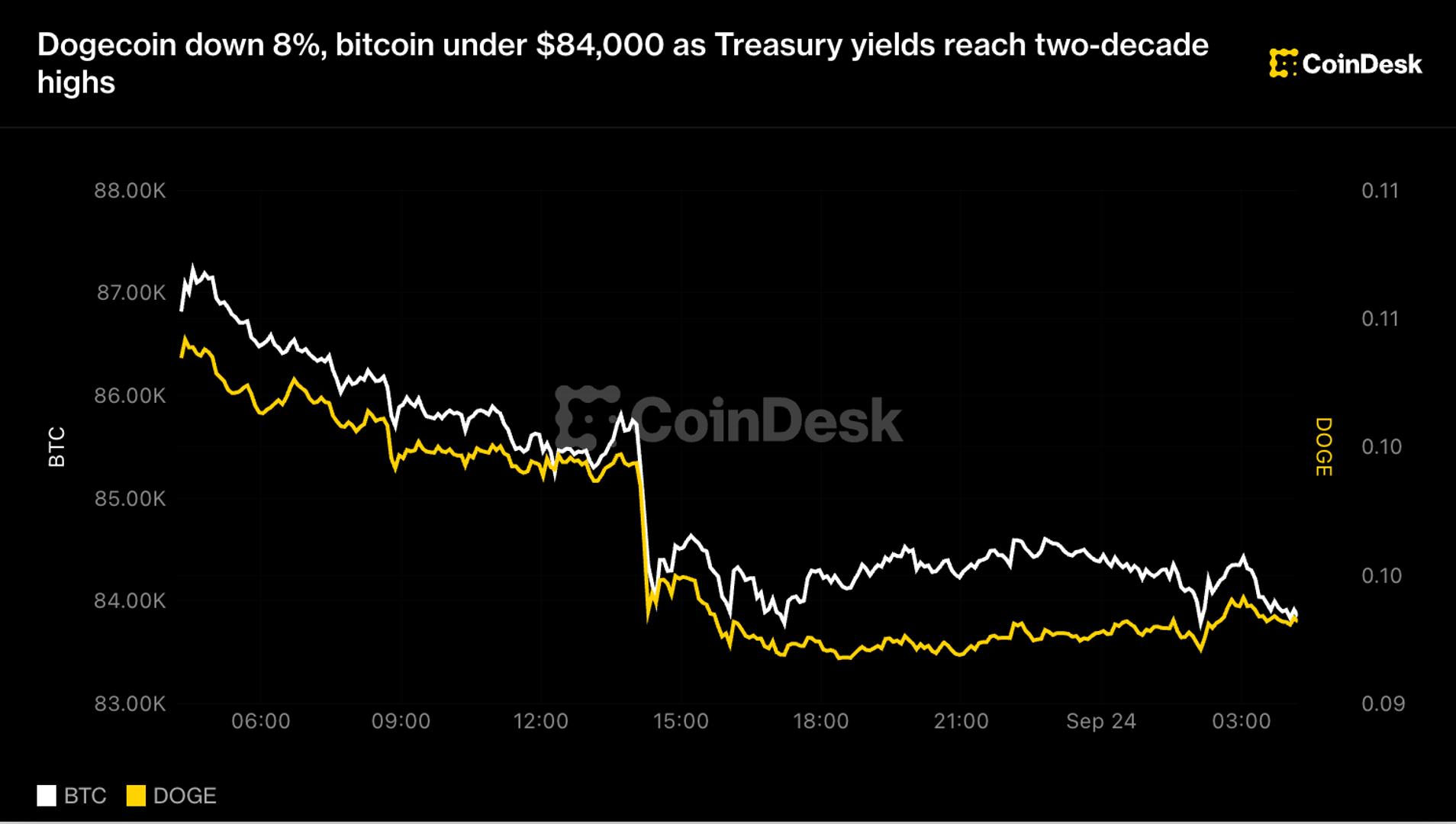
A rebound in oil, the strongest U.S. business survey in five years and a poorly received five-year note sale pushed borrowing costs higher, with DOGE leading token losses.
Bitcoin traded near $83,900 as of Thursday Asian morning hours, down more than 2% over 24 hours after touching nearly $87,300, CoinDesk data show. The 10-year U.S. Treasury yield closed Wednesday at 5.11%, up 15 basis points in a day, according to Treasury data.
DOGE took the worst of it, falling 7% to just above 9 cents. ZEC, XRP and HYPE each lost between 5% and 6%, while ether, SOL and BNB fell 2% to 3%. TRX held flat.
Brent crude turned first, climbing more than 4% to nearly $104 a barrel and ending a six-session slide that had been easing inflation worries. S&P Global's flash survey of U.S. businesses followed, showing output growing at its fastest pace in more than five years, with the composite index at 58.4, its highest since July 2021.
The Treasury's $70 billion sale of five-year notes landed later in the day and drew weak demand. It cleared at 5.033%, the highest auction yield since 2006 and about 3 basis points above where the notes traded just before the sale, meaning buyers demanded extra yield to take on the debt.
Higher yields on government debt raise the bar for holding assets that pay nothing, bitcoin included, and make it more expensive to borrow against leveraged positions. Bitcoin's steepest drop on Wednesday came shortly after the business survey was released.
Bitcoin now sits below $85,000, the strike where Ledn co-founder Mauricio Di Bartolomeo flagged a large block of call options ahead of Friday's roughly $14 billion expiry on Deribit.
As stablecoins move into regulated finance, APAC is becoming a key proving ground. This report maps the region’s rules, use cases, and RLUSD’s role.
Asanat Analysis — Why it matters
Treasury yields at their highest since 2007 signal a structural shift in macro liquidity conditions. When real rates climb sharply, risk assets—particularly those without cash flows or yields—face headwinds. Bitcoin's weakness below $84k reflects this repricing, though the magnitude (modest single-digit declines) suggests the market hasn't capitulated. Dogecoin's 8% underperformance hints at differentiated risk-off behavior, where speculative alts shed faster than flagship assets during liquidity events.
The trigger set—strong economic data, oil rebound, weak Treasury auction demand—points to potential stagflation concerns or a repricing of Fed rate cut odds. This matters because crypto valuations have compressed over two years partly on expectations of lower rates and QE. A sustained high-yield environment could pressure multiples further unless on-chain activity or institutional adoption narratives provide offsetting catalysts. Watch whether these moves persist across multiple sessions or represent tactical pullback.